Let’s say you’re a talented trader looking for funding to expand your trading operations. After researching your options, you discover that prop firms offer the best solution, allowing you to unlock more capital and scale your trading. You may even start by searching “How to Become a Prop Trader” to explore the process. But how do prop firms make money? What’s in it for them? After all, they’re taking risks by giving you access to their money.
Understanding how prop firms generate revenue is crucial for any trader looking to partner with one. In this guide, we’ll answer the burning question of how prop firms make money. By the end, you’ll know exactly what to expect and how they can help you achieve your trading goals.
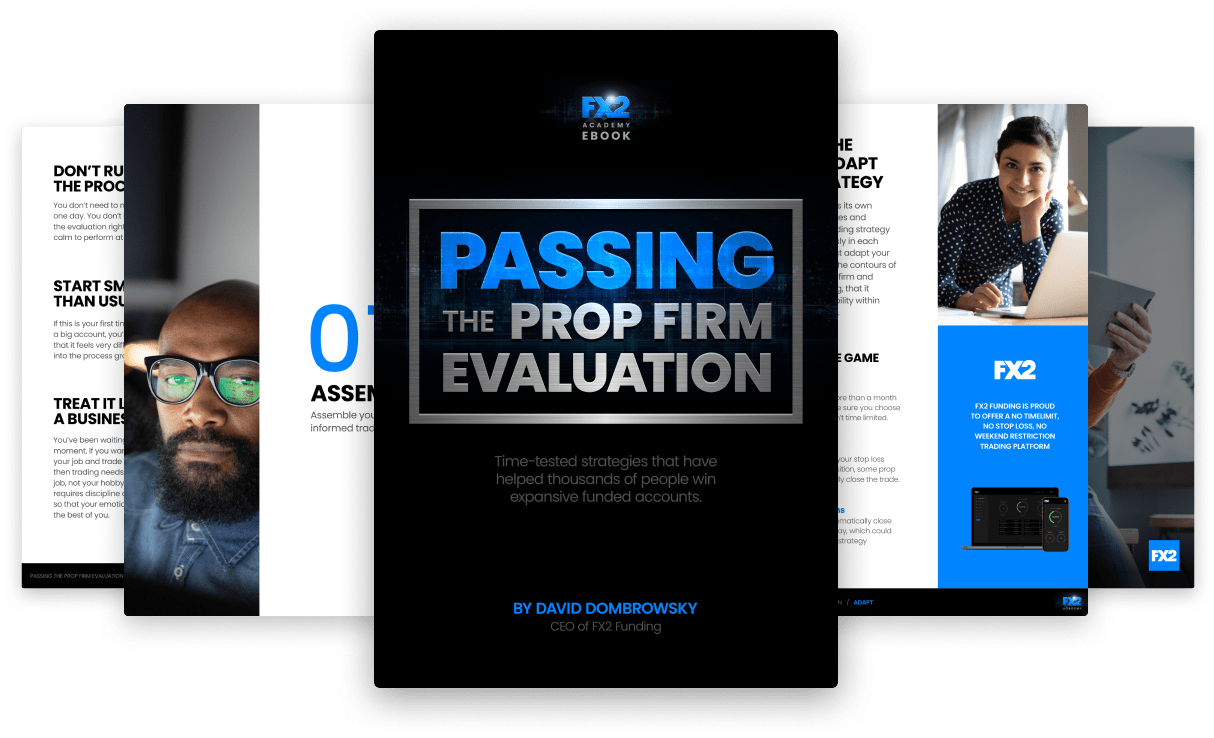
FX2 Funding is a prop trading firm that offers traders a clear path toward success. If you’re looking for a way to boost your trading career, let us help you reach your goals. Our program is designed to help traders get back on track and succeed, even after a tough trading period.
Introduction to Prop Firms

What Are Prop Firms?
Proprietary trading firms, commonly called prop firms, are financial entities that enable traders to trade using the firm’s capital rather than their own. This arrangement offers traders access to substantial resources, advanced technology, and mentorship while allowing the firm to share in the profits generated by successful trades. Prop firms play a pivotal role in the trading ecosystem, providing opportunities for novice and experienced traders to maximize their potential in financial markets.
How Prop Firms Operate
Prop firms pool capital from investors and allocate it to traders who meet specific qualifications. Traders are evaluated based on their skills, strategies, and past performance. Once accepted, they gain access to substantial funds, enabling them to take more prominent positions in financial markets.
This model allows traders to leverage opportunities they might not otherwise afford with personal capital. Profit-sharing is central to prop firms. Typically, firms retain a higher percentage of profits (e.g., 80%), while traders receive a smaller share (e.g., 20%). This incentivizes traders to perform at their best while ensuring the firm maintains profitability.
How to Join a Prop Firm
To join a prop firm, traders typically undergo an evaluation process that includes:
- 1. Submitting applications detailing trading history and strategies.
- 2. Participating in interviews or assessments.
- 3. Demonstrating proficiency through simulated or live trading tests.
Successful applicants gain access to capital and resources but must adhere to strict risk management protocols set by the firm.
Related Reading
- What Is Prop Firm Trading
- Is Prop Trading Worth It
- Are Prop Trading Firms Legit
- How to Get Into Prop Trading
- How Do Prop Firms Work
- Prop Trading vs. Hedge Fund
The Difference Between Prop Firms and Other Trading Institutions

Prop Firms vs. Traditional Brokerages: What’s the Difference?
Prop firms stand out compared to traditional brokerages by providing traders with the firm’s capital to trade financial instruments. Traders do not need to deposit their money, significantly reducing personal financial risk. In contrast, traditional brokerages act as intermediaries, requiring traders to deposit funds and execute trades using personal capital.
Prop Firms vs. Hedge Funds: What’s the Difference?
Prop firms and hedge funds differ significantly in structure, goals, trading strategies, and risk management. While prop firms trade using their capital, hedge funds pool money from multiple investors (e.g., institutions or high-net-worth individuals) to create diversified portfolios aimed at long-term returns.
Prop Firms vs. Market Makers: What’s the Difference?
Market makers provide liquidity by quoting buy and sell prices for financial instruments and profiting from the bid-ask spread. In contrast, prop firms aim to generate profits through speculative trading using firm capital.
Prop Firms vs. Retail Trading: What’s the Difference?
Prop firms offer traders a more structured and supportive environment than retail trading. While retail traders use their own money to trade in financial markets, traders at prop firms use the firm’s capital after passing an evaluation phase that assesses their skills.
How Do Prop Firms Make Money

1. Challenge Fees: The Initial Test to Get Funded
Challenge fees represent one of the most significant revenue streams for prop firms. Traders must pay a fee for an evaluation process that tests their trading skills and adherence to risk management rules. These challenges often involve hitting specific profit targets while within strict drawdown limits.
Fee Range
Challenge fees typically range from $100 for accounts with $10,000 in funding to over $1,000 for accounts with $100,000 or more.
Success Rate
According to industry statistics, only 5-10% of traders successfully pass these evaluations.
Impact
The high failure rate ensures a steady flow of revenue for prop firms. For instance, if a firm has 10,000 traders attempting a $200 challenge, it generates $2 million in revenue alone.
Even after accounting for payouts to successful traders, the firm retains a significant portion of these fees.
2. Monthly Subscriptions: Covering the Costs of Capital Access
Some prop firms charge monthly subscription fees for ongoing access to trading capital. This model eliminates the need for traders to pass an evaluation process but provides them with limited access to funds.
Fee Range
Subscriptions typically range from $100 to $300 per month.
Example
A firm with 5,000 active traders paying $150 annually generates $750,000 in recurring monthly revenue.
Impact
This model provides a consistent income stream for prop firms, regardless of market conditions or trader performance. It also appeals to traders who prefer predictable costs over one-time challenge fees.
3. Profit Splits: How Firms Take Their Cut After You Start Trading
Once traders pass the evaluation or subscribe for capital access, they enter into a profit-sharing agreement with the firm. The firm takes a percentage of the trader’s profits as compensation for providing capital. The standard profit split ranges from 70/30 to 80/20 in the trader’s favor.
Example
If a trader earns $10,000 in profits and the firm takes 20%, it earns $2,000.
Impact
Profit splits incentivize both parties—traders aim for higher profits while firms benefit from successful trading strategies.
However, since only a small percentage of traders achieve consistent profitability, this is often a secondary revenue stream compared to challenge fees.
4. Spreads and Commissions: How Prop Firms Make Money on Your Trades
Prop firms may earn additional revenue through spreads and commissions on trades their funded traders execute. These fees are either charged directly or shared with partner brokers.
Mechanism
Firms mark up spreads or charge commissions per trade.
Example
A trader executing trades worth $1 million on a funded account could generate significant commission revenue for the firm.
Impact
This model is particularly lucrative for high-frequency trading environments where large transactions occur daily.
5. Hidden Costs: Extra Fees That Make the Firm Money
Prop firms often charge additional fees for services such as platform usage, data feeds, or account resets when traders breach loss limits.
Reset Fees
Typically range from $50 to $200 per reset.
Platform Fees
Some firms charge $50-$200 monthly for proprietary platforms or premium data feeds.
Impact
These hidden costs add up over time and contribute significantly to the firm’s bottom line without requiring additional operational effort.
6. Educational Services: How Courses and Resources Generate Revenue
Many prop firms offer educational resources, such as courses, webinars, and mentorship programs, to improve traders’ skills. These programs are often monetized as premium offerings.
Fee Range
Educational packages can cost anywhere from $100 to several thousand dollars.
Value Addition
These resources attract aspiring traders while generating additional income streams.
Impact
Prop firms earn revenue and increase the likelihood of profitable traders on their platforms by investing in trader education.
7. Non-Real Market Execution: Trading on Simulated Platforms
Some prop firms operate entirely on simulated trading environments rather than executing real trades in live markets. In such cases, they profit directly from traders’ losses without risking actual capital.
Ethical Concerns
This practice raises questions about transparency and fairness, but remains a standard model among smaller or less reputable firms.
8. Proprietary Trading Profits: How Firms Trade Their Capital
While retail-focused prop firms rely heavily on challenge fees and subscriptions, traditional professional prop firms generate most of their income through direct trading profits.
Market Activities Include
- a. Arbitrage opportunities
- b. Market-making (profiting from bid-ask spreads)
- c. Algorithmic trading.
These activities require significant expertise and capital but can yield substantial returns during favorable market conditions.
Related Reading
- Crypto Prop Trading
- Prop Trading Strategies
- Prop Desk Trading
- Best Prop Trading Firms for Beginners
- Highest Paying Prop Trading Firms
- Best Proprietary Trading Firms
- Best Prop Firms for US Traders
- Futures Prop Trading Firms
- Forex Prop Trading Firms
- Stock Prop Trading Firms
Benefits of Working with a Prop Firm

Access to Significant Capital
One of the most compelling benefits of joining a prop firm is access to substantial trading capital. Unlike retail trading, where individuals rely on their funds, prop firms provide traders with large accounts funded by the firm. This allows traders to:
Take Larger Positions
With access to more capital, traders can execute more significant trades and potentially achieve higher profits.
Leverage Opportunities
Prop firms often provide leverage, enabling traders to control more capital than they possess personally. This amplifies profit potential and allows traders to capitalize on short-term market opportunities.
Reduced Financial Risk
Traders do not risk their own money; losses are absorbed by the firm, which minimizes personal financial exposure.
Advanced Trading Technology
Prop firms invest heavily in cutting-edge trading platforms and tools, giving traders a competitive edge. These include:
Sophisticated Platforms
High-frequency trading systems, automated software, and institutional-grade platforms enhance execution speed and efficiency.
Market Data Access
Real-time and historical data, advanced charting capabilities, and analytics tools help traders make informed decisions.
Research Tools
Some firms provide access to databases with financial statements, earnings reports, and company screeners for fundamental analysis.
These technologies allow traders to navigate complex markets effectively and improve overall performance.
Professional Development Opportunities
Prop firms prioritize the growth of their traders by offering robust training programs and mentorship opportunities. Benefits include:
Structured Training
Comprehensive programs covering market analysis, risk management, and trading strategies help traders refine their skills.
Mentorship
Seasoned professionals guide traders through challenges, helping them develop profitable strategies.
Continuous Learning
Regular feedback sessions and access to trading psychologists ensure traders stay updated on market trends and improve their performance.
This emphasis on professional development fosters long-term success in the competitive trading industry.
Collaborative Environment
Prop firms create a community-driven atmosphere where traders can share ideas, strategies, and insights. This collaborative environment offers:
Knowledge Sharing
Traders benefit from collective expertise by learning from peers and experienced professionals.
Support Networks
Teams of professional traders guide difficult market conditions. Such collaboration enhances individual growth and contributes to overall team success.
Risk Management Support
Prop firms implement strict risk management protocols to protect their capital while allowing traders to focus on performance. Key measures include:
Position Sizing Limits
Traders are restricted from taking substantial positions that could jeopardize the firm’s funds.
Stop-Loss Orders
Automated systems prevent significant losses by exiting trades when predetermined thresholds are reached.
Structured Guidelines
Risk management policies ensure disciplined trading practices. This support helps traders avoid catastrophic losses while maintaining profitability.
Flexible Work Environment
Many prop firms offer flexible working hours tailored to individual preferences. Benefits include:
Autonomy
Traders often have the freedom to set their schedules as long as they meet performance targets.
Work-Life Balance
Once they establish consistent results, experienced traders can achieve a healthy balance between work commitments and personal life. This flexibility makes prop trading appealing for those seeking control over their work environment.
Career Advancement Opportunities
Prop firms reward talent with clear pathways for career progression. Advantages include:
Performance-Based Compensation
Traders earn a percentage of the profits they generate, incentivizing high performance.
Scaling Accounts
Successful traders may receive larger account sizes or premium programs that increase earning potential.
Rapid Growth
Skilled individuals can quickly rank in a merit-based system prioritizing results over tenure. These opportunities make prop trading a lucrative career choice for ambitious individuals.
Related Reading
- Best Prop Firm for Options Trading
- Best Crypto Prop Trading Firms
- Best Remote Prop Trading Firms
- FTMO vs. The Prop Trading
- Day Trading Prop Firms
- Equity Prop Trading Firms
- No Minimum Trading Days Prop Firm
- Futures Swing Trading Prop Firm