Consider sitting at your desk, staring at the computer screen as it flashes numbers and graphs at you like some sort of alien code. You’ve spent the last few days studying a specific stock, hoping to know the ins and outs of the company before you make a trade. And while your preparation may pay off, the truth is that the market doesn’t care about your research. So, you take a deep breath, close your eyes, and click buy. In that moment, you might find yourself wondering, is trading worth it? The stress, the uncertainty, and the hours of research can be overwhelming—but for many, the potential rewards, financial freedom, and personal growth make it all worthwhile.
When you open your eyes again moments later, nothing looks the same. You’ve done everything right, but the market has changed, and you’ve lost money on your trade. This is what many day traders experience. The strategy is attractive; it promises the ability to make quick profits on short-term trades. But as many as 80% of day traders lose money, and the odds of your success are not much better if you’ve read a few books and taken an online course.
Options trading is worth it, as it can offer an alternative to day trading. While it can be just as complex and risky as day trading, options can help traders mitigate risk and even make a profit when the underlying asset moves in the opposite direction of their trade. This guide will help you determine whether options trading is worth it, allowing you to make an informed decision about whether this strategy is right for you. FX2 Funding, a prop trading firm, offers a unique opportunity for traders, so you can learn the ins and outs of options trading while trading with our capital.
What is Options Trading?

Options trading involves buying and selling contracts that grant the right, but not the obligation, to purchase or sell a financial asset at a certain price within a specified timeframe. These contracts, known as options, are available on a wide range of underlying assets, including stocks, commodities, indices, and funds. Investors typically access options through brokerage accounts, much like other asset classes such as stocks or ETFs. Three essential features define each option’s contract:
1. Strike Price
The fixed price at which the option holder can buy (call option) or sell (put option) the underlying asset.
2. Expiration Date
The last date on which the option can be exercised before it becomes worthless.
3. Option Premium
The upfront cost paid to acquire the option contract.
Options trading can be a powerful tool for implementing various strategies. Some investors use options to generate additional income, while others use them to hedge against potential losses in their portfolios. More advanced traders may use options to speculate on the direction of market movements, seeking to profit from price changes without owning the underlying asset.
While options offer unique advantages such as leverage, flexibility, and risk management, they also come with higher complexity and risk compared to traditional stock trading. Success in options trading requires a solid understanding of market dynamics, strategic planning, and disciplined risk control.
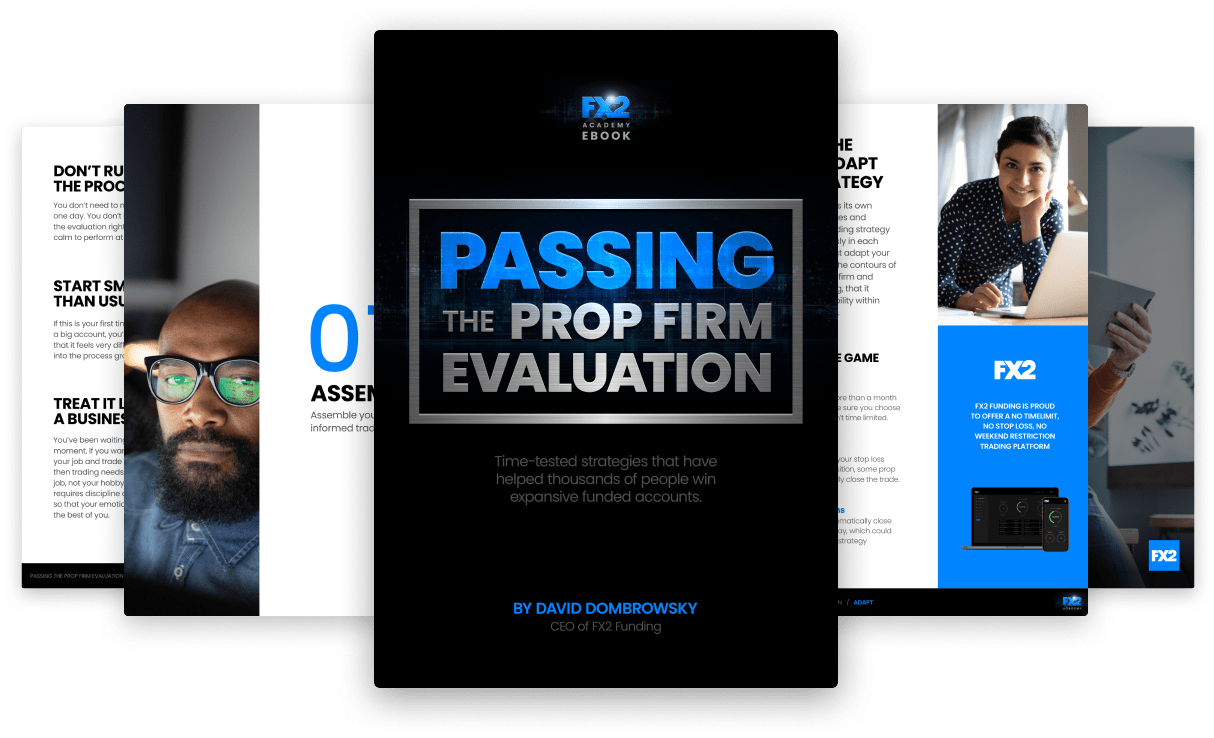
For traders seeking to access substantial capital without risking their funds, FX2 Funding offers a compelling solution. FX2 Funding is a proprietary trading firm that allows traders to manage funded accounts after passing a straightforward evaluation process. This model is beautiful for individuals who wish to engage in options trading or other asset classes but may lack substantial initial capital.
Get Funded and Start Prop Trading Today
At FX2 Funding, we’ve built our proprietary trading firm on the principles of reliability, transparency, and trader success. We stand apart in a crowded industry by delivering what matters most to serious traders: consistently fast payouts, transparent and unchanging rules, and responsive support from experienced trading professionals. Our MT5 platform provides the professional environment traders need to succeed, while our scaling program enables growth from $25,000 to over $400,000 in funding as performance milestones are achieved.
We’ve designed our evaluation process to identify skilled traders and provide them with significant capital without requiring personal financial risk or large upfront investments. Whether you’re an aspiring trader looking to break into the industry or an experienced professional seeking reliable backing, FX2 Funding offers the trustworthy foundation you need to build a successful trading career. Get started with an evaluation account today and discover why thousands of traders worldwide choose FX2 Funding as their prop trading firm partner.
Related Reading
- How to Become an Investor With No Money
- How to Flip Money
- Most Profitable Trading Strategy
- How Much Money Do You Need to Start Trading Stocks
- Is Swing Trading Better Than Day Trading
- Part Time Trading
- How Long Does It Take to Become a Profitable Day Trader
- How to Pick Good Stocks for Short-term
Is Options Trading Worth It?

Options trading can be worthwhile, but its value primarily depends on the investor’s knowledge, goals, and willingness to actively manage their investments. Options are versatile financial instruments that can enhance a portfolio by providing income, protection, and leverage. One of the primary benefits of options is their ability to hedge against market downturns. For example, put options can act like insurance, limiting downside losses while allowing investors to participate in upside gains.
This hedging function helps reduce risk at a reasonable cost, similar to insuring a home or car. Options also offer leverage, enabling traders to control a larger amount of stock with a smaller upfront investment. This can amplify returns if the market moves in the trader’s favor. Speculators often use call options to bet on stock price increases without actually buying the stock, which can be a more cost-effective approach.
Moreover, options provide a wide range of strategic possibilities. Investors can combine calls and puts in various ways to align with bull, bear, or neutral market views. Strategies like covered calls generate income with relatively low risk, while spreads can limit potential losses, making options accessible even to newer traders. However, options require a solid understanding and active management. Many investors avoid them due to perceived complexity or past negative experiences. Misuse or lack of knowledge can lead to significant losses, especially for options sellers who may face unlimited risk.
At FX2 Funding, we’ve built our proprietary trading firm on the principles of reliability, transparency, and trader success. We stand apart in a crowded industry by delivering what matters most to serious traders: consistently fast payouts, transparent and unchanging rules, and responsive support from experienced trading professionals. Our MT5 platform provides the professional environment traders need to succeed, while our scaling program enables growth from $25,000 to over $400,000 in funding as performance milestones are achieved.
Benefits of Options Trading

Cost-Efficiency
Options trading is generally less expensive than buying stocks outright. When you buy options, you control a position similar to owning the underlying stock but at a fraction of the cost. For example, purchasing 200 shares of a stock priced at $80 would cost $16,000, whereas buying two call option contracts (each representing 100 shares) at a $20 premium would only require $4,000. This substantial saving frees up capital that can be used elsewhere for diversification or other investments.
This strategy, often referred to as the stock replacement strategy, allows investors to replicate stock ownership with less upfront capital. While selecting the right option contract requires careful consideration, it remains a practical and efficient way to gain market exposure without tying up large sums of money.
For instance, if an investor wants to buy 200 shares of XYZ Corp trading at $131, instead of spending $26,200, they could buy two call option contracts with a strike price of $100 at $34 each. This would cost $6,800, leaving significant funds available for other opportunities or interest accrual.
Reduced Risk
Options can reduce risk compared to direct stock ownership. When used correctly, they serve as an effective hedging tool. Unlike stop-loss orders, which can fail during volatile markets or gap openings, options provide more reliable downside protection. For example, buying a put option gives the right, but not the obligation, to sell the stock at a predetermined strike price, effectively setting a floor on potential losses regardless of how far the stock price falls.
This protective feature means investors can limit losses to the premium paid for the option, unlike stop orders that might trigger sales at much lower prices during after-hours or volatile trading. For example, if a stock purchased at $50 drops sharply overnight to $20, a stop-loss order set at $45 might execute at $20, resulting in a significant loss.
A put option, however, would protect the investor by allowing the sale at the strike price, limiting losses to the option cost. Additionally, using in-the-money call options as a stock replacement can limit losses to the option premium, which is often significantly less than the potential loss from owning the stock outright. This makes options a dependable form of risk management when used correctly.
Higher Potential Returns
Options offer the potential for amplified returns due to leverage. Since options require a smaller initial investment than stocks, the percentage returns can be much higher if the underlying asset moves favorably. For example, if a stock rises 10%, the corresponding call option might increase by a much larger percentage, sometimes several times over, depending on the option’s delta and other factors.
To illustrate, consider buying a stock at $50 versus purchasing a call option at $6 with a delta of 0.8. If the stock price rises by $5 (10%), the option’s price could increase by $4 (67%), resulting in a much higher return relative to the initial investment. However, it is crucial to understand that options can also expire worthless, meaning the entire premium could be lost if the market moves against the position.
This leverage effect attracts many traders to options, as it allows them to control larger positions and potentially earn higher returns with less capital. However, it also requires careful risk management.
More Strategic Alternatives
Options provide greater strategic flexibility than traditional stock trading. Investors can use options to construct synthetic positions, hedge existing investments, or speculate on market movements in multiple directions (up, down, or sideways). This flexibility enables the development of tailored strategies that suit various market conditions and risk tolerances.
For example, investors who are unable to short stocks due to broker restrictions can utilize put options to profit from declines. Options also enable trading based on volatility and time decay, which are not factors in regular stock trading. Advanced strategies such as spreads, straddles, and strangles allow investors to capitalize on various market scenarios, including periods of high or low volatility.
This strategic versatility makes options a powerful tool for portfolio enhancement, income generation, and risk management, offering opportunities beyond simple buy-and-hold stock investing.
FX2 Funding offers the trustworthy foundation you need to build a successful trading career. Get started with an evaluation account today and discover why thousands of traders worldwide choose FX2 Funding as their prop trading firm partner.
Significant Risks of Options Trading

The Total Loss of Premium
When you buy an option, its price is referred to as the premium. The first risk you face when purchasing options is the total loss of this premium. If you hold an option contract until expiration and it is out of the money, it will expire worthless, and you will lose 100% of the premium you paid for the contract. This occurs when the underlying asset fails to move in the anticipated direction before the expiration date. Unlike stocks, which retain some value, options can become completely worthless, resulting in a total loss of the initial investment.
Time Decay
Options have a limited lifespan and lose value as they approach their expiration date, a phenomenon known as time decay. Even if the underlying asset price remains steady, the option’s value erodes daily. This means traders must not only predict the direction of price movement but also accurately predict the timing. Failure to do so can lead to losses despite being “right” about the market direction.
Complexity and Misuse
Options are inherently more complicated than simply buying or selling stocks. They involve multiple variables such as strike prices, expiration dates, and Greeks (Delta, Theta, Vega, etc.). New traders often misuse advanced strategies or misunderstand pricing, resulting in unintended losses. For example, selling uncovered (naked) calls can expose traders to theoretically unlimited losses if the market moves sharply against them.
Volatility Risk
Options prices are susceptible to market volatility. Sudden spikes or drops in volatility can cause option premiums to fluctuate wildly, sometimes independently of the underlying asset’s price movement. This can increase costs or lead to unexpected losses, particularly in volatile environments or around significant events, such as earnings announcements.
Liquidity Risk
Not all options are actively traded. Some contracts, especially those far out-of-the-money or with less popular strike prices, may have low liquidity. This can make it difficult to enter or exit positions at favorable prices, potentially causing slippage or forcing traders to accept worse prices than expected.
Assignment and Delivery Risk
For sellers (writers) of options, there is the risk of assignment, where the buyer exercises the option and the writer is obligated to fulfill the contract terms. This could mean delivering the underlying asset or paying the full value in cash. Failure to meet these obligations can result in penalties and additional costs. Buyers holding in-the-money options at expiration must also be prepared to exercise or lose their premium.
Margin and Significant Losses for Writers
Option writers often must maintain margin accounts. If the market moves against their position, they may be required to add funds quickly or close positions at a loss. Unlike buyers, writers can face significant or unlimited losses, particularly with uncovered strategies, which can exceed their initial capital.
Risk of Input Errors
Trading options requires precision. Entering the wrong trade, such as selling when intending to buy, or selecting the wrong strike price or expiration, can expose traders to unintended risks and losses. Fast-moving markets increase the chance of such errors, which can be costly if not caught early.
FX2 Funding offers the trustworthy foundation you need to build a successful trading career. Get started with an evaluation account today and discover why thousands of traders worldwide choose FX2 Funding as their prop trading firm partner.
Related Reading
- How Much Do Day Traders Make
- Simple Trading Strategy
- What is Price Action in Trading
- Is Copy Trading Profitable
- How Much Money Do You Need to Start Day Trading
- Position Trading Strategy
- Short Term Options Trading
- How to Take Profits in Trading
Get Funded and Start Prop Trading Today

Day trading can be profitable, but it might not be for you. Profitable day trading requires discipline, focus, and a well-thought-out plan. It can also take time to learn the ropes and develop a strategy that works for you. Many aspiring day traders enter the practice with high hopes but quickly become discouraged when they realize how challenging it can be. Others find that they simply lack the right temperament for day trading. Even those who manage to find success can struggle with the emotional toll of day trading. Day trading can be an unforgiving endeavor, and it can take a serious mental toll that isn’t for everyone. It’s essential to keep this in mind before you begin.
How Can I Make Day Trading Profitable?
If you’re serious about making day trading profitable, there are a few steps you can take. First, approach day trading like a business rather than a way to get quick cash. This means developing a solid plan, keeping detailed records of your trades, and treating your day trading like a job. You should also be prepared to put in the time to learn the ins and outs of day trading before you start to see any returns. Finally, consider starting with a demo account or a funded trading account to practice day trading strategies without risking your own money.
How Can I Get a Funded Account?
At FX2 Funding, we’ve built our proprietary trading firm on the principles of reliability, transparency, and trader success. We stand apart in a crowded industry by delivering what matters most to serious traders: consistently fast payouts, transparent and unchanging rules, and responsive support from experienced trading professionals. Our MT5 platform provides the professional environment traders need to succeed, while our scaling program enables growth from $25,000 to over $400,000 in funding as performance milestones are achieved.
We’ve designed our evaluation process to identify skilled traders and provide them with significant capital without requiring personal financial risk or large upfront investments. Whether you’re an aspiring trader looking to break into the industry or an experienced professional seeking reliable backing, FX2 Funding offers the trustworthy foundation you need to build a successful trading career. Get started with an evaluation account today and discover why thousands of traders worldwide choose FX2 Funding as their prop trading firm partner.
Related Reading
- How Old Do You Have to Be to Start Trading
- What is Orb in Trading
- Best Stocks for Beginners
- Swing Trading Strategies
- Day Trading Indicators
- Trading Risk Management Tools
- Key Levels in Trading
- Best Market to Trade for Beginners