Swing trading and day trading take drastically different approaches to the financial markets, and one strategy may appeal to you more than the other. Day trading has a reputation for being chaotic and fast-paced, while swing trading tends to have a more relaxed vibe. Is swing trading better than day trading? It depends. Many new traders wonder, is day trading profitable? The truth is, while it can be, profitability often comes down to experience, strategy, risk management, and emotional discipline. In this article, we’ll compare both methods to help you decide which approach aligns best with your trading goals and lifestyle.
Suppose you’re curious about whether day trading is profitable and how it compares to swing trading, you’re in the right place. This guide will help you understand the differences between these two strategies, enabling you to determine which one best suits your lifestyle, risk tolerance, and financial goals.
FX2 Funding’s prop trading firm can help you achieve your trading objectives, whether you choose swing or day trading. With our resources, you can more effectively assess your skills and receive support as you reach your financial goals.
What is Swing Trading?
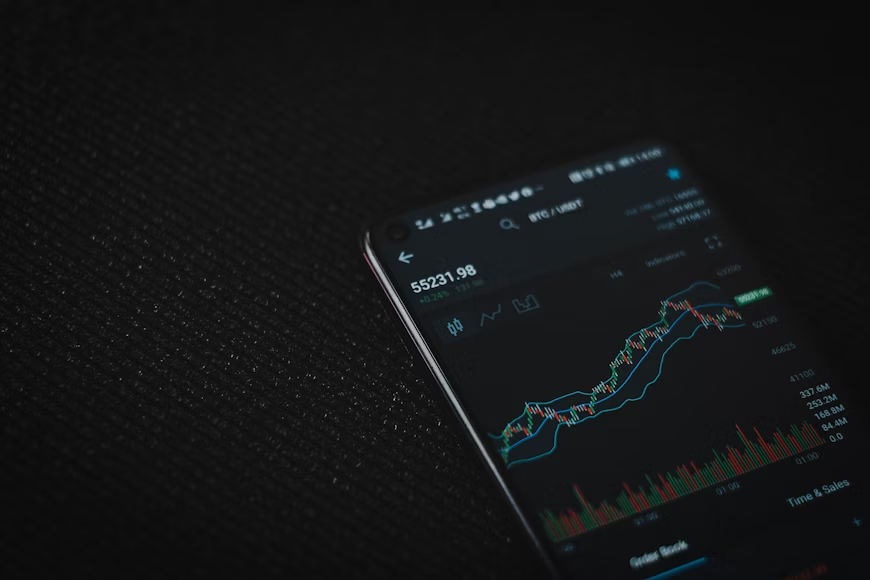
Swing trading is a trading strategy that focuses on capitalizing on price swings or fluctuations in stocks, commodities, or currencies over a short to medium-term time frame, typically ranging from a few days to several weeks. Unlike day trading, where positions are opened and closed within the same day, swing traders hold their positions longer to capture more substantial price movements, aiming to profit from the natural ebb and flow of market trends.
Swing traders rely heavily on technical analysis tools, such as moving averages, the Relative Strength Index (RSI), and the Moving Average Convergence Divergence (MACD), to identify potential entry and exit points. They look for areas of support and resistance and try to enter trades when a countertrend ends and the dominant trend resumes. This approach requires patience and discipline, as traders must wait for the proper setups and manage risk carefully.
Swing trading occupies a middle ground between day trading and long-term investing. It offers the potential for larger profits per trade than day trading but requires less time commitment than full-time day trading.
Advantages of Swing Trading
Time Flexibility
Swing trading does not require constant market monitoring, allowing traders to balance their responsibilities with other full-time jobs or commitments.
Potential for Larger Gains
Holding positions for days or weeks can capture bigger price moves compared to day trading, increasing profit potential.
Lower Technology Requirements
Swing trading can be executed with standard trading platforms and does not demand the high-speed technology necessary for day trading.
Use of Stop-Loss Orders
Traders can set stop-loss orders to limit downside risk, which can be automated to reduce the need for constant oversight.
Accessibility
Anyone with sufficient knowledge and capital can attempt swing trading, making it accessible to a wide range of investors.
Disadvantages of Swing Trading
Overnight and Weekend Risk
Holding positions for multiple days exposes traders to risks from overnight market gaps or unexpected news events that can cause significant losses.
Capital Tied Up
Funds are locked in positions for more extended periods, reducing liquidity and the ability to redeploy capital quickly.
Potential for Larger Losses
While profits can be larger, losses can also accumulate if the market moves against the trader’s position over several days.
Requires Discipline and Risk Management
Successful swing trading demands strict adherence to trading plans and risk controls, which can be challenging for less experienced traders.
Less Exciting
Compared to day trading, swing trading is a slower-paced approach and may be perceived as less thrilling, which can impact trader engagement.
Related Reading
- How to Become an Investor With No Money
- How to Flip Money
- Most Profitable Trading Strategy
- How Much Money Do You Need to Start Trading Stocks
- Part Time Trading
- How Long Does It Take to Become a Profitable Day Trader
- How to Pick Good Stocks for Short-term
What is Day Trading?

Day trading involves buying and selling financial instruments within the same trading day. The strategy is to capitalize on short-term price fluctuations. Day traders close all positions before the market closes, avoiding overnight risk. While long-term investors seek fundamentally sound securities to hold for the long term, day traders look for liquid markets with high volatility to generate quick profits. Stocks and exchange-traded funds are standard day trading vehicles, but so are futures and options tied to various asset classes, including commodities, currencies, and interest rates.
Day traders usually rely on technical analysis to identify promising securities and optimal entry and exit points. This approach requires sophisticated charting tools and the ability to make quick decisions under pressure. Day trading also requires a high degree of discipline and objectivity, as emotions can derail even the most well-thought-out trading plans.
The Upsides of Day Trading
Investors are drawn to day trading for several reasons.
Potential for Rapid, High Returns
Day trading allows traders to recycle capital multiple times a day. Profitable trades can compound rapidly, yielding substantial returns in a relatively short period of time.
No Overnight Market Risk
Day trading eliminates exposure to unexpected overnight news or events that can cause significant price gaps.
Independence and Flexibility
Day traders can work independently, setting their schedules within market hours, without needing to report to a firm or supervisor.
Lower Educational Barriers
Unlike many finance careers, day trading does not require formal degrees. Success depends more on skills, discipline, and experience.
High Liquidity
Markets like stocks and forex offer ample liquidity, enabling traders to enter and exit positions quickly without significantly impacting prices.
Continuous Learning
The fast-paced nature of day trading encourages ongoing education about market trends, economic indicators, and trading strategies.
The Downside of Day Trading
Despite its allure, day trading is not for everyone. Active traders who buy and sell securities within a short time frame encounter several risks:
High Risk of Financial Loss
Many beginners suffer severe losses initially, and a significant number never achieve consistent profitability. The SEC warns that day trading can lead to substantial financial setbacks, especially when using borrowed money or margin.
Expensive Setup and Costs
Competing with professional traders requires investment in advanced trading platforms, charting software, and powerful computers. Additionally, frequent trades incur high transaction fees, commissions, and data costs, which can erode profits.
Time-Intensive
Successful day trading demands full attention during market hours. Traders often quit stable jobs to focus entirely on day trading, as positions can quickly shift from profitable to losing.
Emotional and Psychological Stress
The rapid pace and high stakes of day trading can lead to stress and emotional decision-making, which may impair judgment and increase risk.
Missed Overnight Gains
While avoiding overnight risk protects against losses, it also means missing out on potential profits from significant after-hours or pre-market price moves.
Day Trading vs. Swing Trading

Trade Frequency and Duration
Day trading and swing trading differ significantly in terms of trade frequency and duration. Day trading involves executing multiple trades within a single day, with all positions closed before the end of the market session. This strategy is designed to capitalize on small, intraday price movements, and traders often make dozens of trades each day. The typical holding period for a day trade ranges from a few seconds to several hours, but never overnight.
Swing trading, on the other hand, focuses on capturing price swings over a longer timeframe. Swing traders hold positions for several days to a few weeks, aiming to capitalize on medium-term trends rather than reacting to minute-to-minute volatility. This approach requires fewer trades each week compared to day trading, with each trade lasting significantly longer.
Time Commitment and Lifestyle
Day trading is typically viewed as a full-time endeavor. Traders must monitor the markets continuously throughout the trading day, reacting quickly to price changes and news events. This level of engagement requires constant attention and can be highly stressful due to its rapid pace and the need for immediate decision-making.
Swing trading is more flexible and can often be managed on a part-time basis. Swing traders typically review the markets once or twice a day, allowing more freedom and less stress. This makes swing trading suitable for those who cannot dedicate their entire day to trading but still want to participate actively in the markets.
Tools and Analysis
Day traders rely heavily on advanced trading platforms, real-time data feeds, and sophisticated technical analysis tools. They use lower timeframes (such as 1-minute, 5-minute, or 15-minute charts) and indicators like moving averages, RSI, and candlestick patterns to make rapid trading decisions. The focus is on short-term price action rather than fundamental analysis.
Swing traders use higher timeframe charts, such as daily or 4-hour intervals, and employ technical indicators that are better suited to identifying broader trends and momentum shifts. Standard tools include longer-term moving averages, support and resistance zones, and trend lines. Swing traders may also consider broader market trends and occasionally incorporate fundamental analysis into their strategies.
Profit Potential and Risk
Day trading seeks to accumulate multiple small gains throughout the day. Because positions are closed before the market closes, day traders avoid overnight risks but are exposed to high transaction costs and frequent small losses. The profit per trade is typically smaller, but the volume of trades can add up over time.
Swing trading aims for fewer but larger gains or losses per trade. Since positions are held longer, there is potential for more significant profit per trade, but also a higher risk of overnight market moves affecting open positions. Proper risk management, such as using stop-loss orders, is crucial for both styles, but especially important for swing traders due to their more extended holding periods.
Accessibility and Requirements
Day trading often requires a substantial capital base and access to state-of-the-art trading technology. Many day traders utilize leverage, which can amplify both gains and losses, making risk management a crucial aspect of their trading strategy. The need for fast execution and high-frequency trading tools can be a barrier for beginners.
Swing trading can be conducted with a standard brokerage account and does not require the same level of technological investment. The lower trade frequency and more extended holding periods make it more accessible for individuals with limited time or resources.
Related Reading
- How Much Do Day Traders Make
- Simple Trading Strategy
- Is Options Trading Worth It
- What is Price Action in Trading
- Is Copy Trading Profitable
- How Much Money Do You Need to Start Day Trading
- Position Trading Strategy
- Short Term Options Trading
- How to Take Profits in Trading
Is Swing Trading Better Than Day Trading

When deciding between swing trading and day trading, there is no absolute “better” strategy; both have their advantages and disadvantages. The choice primarily depends on an individual trader’s skills, lifestyle, risk tolerance, and financial objectives. Both methods have distinct characteristics that appeal to different types of traders.
Understanding Day Trading
Day trading involves buying and selling financial instruments within the same trading day, closing all positions before the market closes for the day. This strategy aims to profit from small price fluctuations throughout the day. Day traders often make multiple trades daily, requiring:
Full-time commitment
Constant market monitoring during trading hours.
Quick decision-making
Ability to act swiftly on technical signals.
Strong discipline and emotional control
Managing stress in a fast-paced environment.
Higher capital requirements
Due to frequent trades and regulatory rules, such as the FINRA pattern day trader rule.
Day trading is intense and can be stressful, but it offers the potential for fast returns. However, it also involves higher transaction costs and risks due to the volume and speed of trades.
Understanding Swing Trading
Swing trading involves holding positions for several days to weeks to capitalize on medium-term price movements or “swings.” Swing traders aim for larger profits per trade but execute fewer trades overall. Key features include:
Flexibility
Less time-consuming, suitable for part-time traders or those with other commitments.
Lower trading frequency
Focus on quality trades rather than quantity.
Moderate risk exposure
Positions are held overnight, exposing traders to overnight market risks.
Combination of technical and fundamental analysis
To identify entry and exit points.
Swing trading is generally considered more accessible for beginners and those who prefer a less stressful, more measured trading approach.
Which Strategy Is Right for You?
Choosing between swing trading and day trading depends on personal factors:
Availability
Day trading demands full-time attention; swing trading suits those with limited time.
Temperament
Day trading requires quick reflexes and emotional resilience, whereas swing trading allows for a calmer approach.
Risk Tolerance
Day trading involves rapid exposure to market volatility; swing trading carries overnight risks but less frequent decision-making.
Financial Goals
Day trading targets frequent small gains; swing trading aims for larger, less frequent profits.
Traders should honestly assess their lifestyle, skills, and goals before committing to either style. Both strategies can be profitable with discipline, a sound trading plan, and proper market analysis.
How FX2 Funding Supports Swing Trading and Day Trading
Flexible Funding for Diverse Trading Styles
FX2 Funding offers a proprietary trading model designed to support both swing trading and day trading by providing traders with real capital to trade, rather than demo accounts. This approach enables traders to adopt their preferred trading style with actual market risk and rewards, thereby fostering a genuine trading experience and growth potential.
Streamlined Evaluation Process
Unlike many prop firms with multi-step evaluations, FX2 Funding features a single-step evaluation, where traders must achieve a 10% profit without breaching simple drawdown rules (6% overall and 4% daily). There is no time limit or minimum trading day requirement, which suits both swing traders who may hold positions for days or weeks and day traders who execute multiple trades within a single day.
Support for Swing Trading
Swing traders benefit from FX2 Funding’s weekend and overnight holding allowance, which is crucial since swing trading involves capturing gains over several days to weeks. The firm permits trading through multiple instruments, including Forex, indices, and cryptocurrencies, with leverage up to 100:1 on Forex, enabling swing traders to capitalize on medium-term price movements.
Support for Day Trading
Day traders can leverage FX2 Funding’s fast execution platforms (MT4 and MT5) and low transaction costs, essential for capitalizing on small intraday price fluctuations. The absence of stop-loss restrictions and allowance for various trading strategies, including scalping, news trading, and the use of Expert Advisors (EAs), provides day traders with flexibility and tools to execute quick trades efficiently.
High Profit Splits and Fast Payouts
FX2 Funding offers traders up to 85% profit splits and processes payouts starting just 7 days after funding, with subsequent payments every 14 days. This rapid and generous payout structure incentivizes both swing and day traders by allowing them to keep a significant portion of their profits and reinvest quickly.
Educational and Community Support
To help traders succeed, FX2 Funding offers access to educational resources, including webinars, e-books, and a supportive trading community. This infrastructure enables traders to refine their strategies, whether for swing or day trading, ensuring they have the knowledge and peer support necessary to thrive.
At FX2 Funding, we’ve built our proprietary trading firm on the principles of reliability, transparency, and trader success. We stand apart in a crowded industry by delivering what matters most to serious traders: consistently fast payouts, transparent and unchanging rules, and responsive support from experienced trading professionals. Our MT5 platform provides the professional environment traders need to succeed, while our scaling program enables growth from $25,000 to over $400,000 in funding as performance milestones are achieved.
We’ve designed our evaluation process to identify skilled traders and provide them with significant capital without requiring personal financial risk or large upfront investments. Whether you’re an aspiring trader looking to break into the industry or an experienced professional seeking reliable backing, FX2 Funding offers the trustworthy foundation you need to build a successful trading career. Get started with an evaluation account today and discover why thousands of traders worldwide choose FX2 Funding as their prop trading firm partner.
Get Funded and Start Prop Trading Today
Swing trading and day trading both have unique benefits and drawbacks. Swing trading focuses on taking advantage of price ‘swings’ or trends that occur over several days or weeks. Because swing traders hold positions for more extended periods than day traders, they can capture larger moves, which can lead to greater profits. Additionally, swing trading typically requires less time and attention than day trading, making it easier to pursue this strategy while balancing other life commitments.
Day trading, on the other hand, seeks to profit off small price fluctuations in stocks, futures, options, and forex over a single trading day. Day traders typically execute dozens, if not hundreds, of trades per session, holding positions for mere minutes or hours before closing them out for a profit (or loss). This rapid-fire approach can generate significant returns, but it also comes with increased risk. As a result, many traders find swing trading to be a more suitable strategy.
How FX2 Funding Supports Trading
At FX2 Funding, we’ve built our proprietary trading firm on the principles of reliability, transparency, and trader success. We stand apart in a crowded industry by delivering what matters most to serious traders: consistently fast payouts, transparent and unchanging rules, and responsive support from experienced trading professionals. Our MT5 platform provides the professional environment traders need to succeed, while our scaling program enables growth from $25,000 to over $400,000 in funding as performance milestones are achieved.
We’ve designed our evaluation process to identify skilled traders and provide them with significant capital without requiring personal financial risk or large upfront investments. Whether you’re an aspiring trader looking to break into the industry or an experienced professional seeking reliable backing, FX2 Funding offers the trustworthy foundation you need to build a successful trading career. Get started with an evaluation account today and discover why thousands of traders worldwide choose FX2 Funding as their prop trading firm partner.
Related Reading
- How Old Do You Have to Be to Start Trading
- What is Orb in Trading
- Best Stocks for Beginners
- Swing Trading Strategies
- Day Trading Indicators
- Trading Risk Management Tools
- Key Levels in Trading
- Best Market to Trade for Beginners