Trading can be a lonely pursuit, and it can feel isolating when you aren’t achieving your goals. A string of losses can knock your confidence and lead to even poorer performance. If you’re feeling stuck, it’s natural to wonder if there’s a better way to trade. What Is prop firm trading? Trading through a proprietary firm offers traders an alternative to going it alone. This article will explore how to become a prop trader and how prop firm can help you achieve faster, smarter, and more efficient trading success by leveraging expert support and capital, ultimately maximizing profitability and long-term growth.
FX2 Funding’s prop trading firm can be an invaluable tool to help you reach your objectives. Our team of experienced professionals can help you identify your weaknesses, develop a structured plan to improve your performance, and provide you with the capital to fund your trading goals.
What is Prop Firm Trading and How Does It Work?

Proprietary trading, commonly referred to as prop trading, is the practice of trading activities where traders use the capital of a prop firm or financial institution rather than their own capital. These traders participate in various financial markets and use various financial instruments, including:
- Shares
- Options
- Futures
- Contracts for difference (CFDs)
The primary goal of prop trading is to generate profits for the institution using the firm’s capital allocated for trading.
Who Else Engages in Prop Trading?
While there are businesses that only engage in prop trading, it is also a practice by:
- Investment banks that have desks specializing in proprietary trading. Banks benefit from having extremely valuable information and order flow visibility.
- Prop trading within the banks has become heavily regulated since the financial crisis of 2008.
- Hedge funds trade their funds and manage funds for their investors.
- High-frequency trading firms that also act as market makers.
- Commodity trading firms, such as Glencore, Vitol, and Trafigura, trade commodities in the physical and future markets.
What are Prop Trading Firms?
A prop trading firm provides its traders with access to capital. In return, the traders share a percentage of the company’s profits. Individuals face many hurdles on their journey to becoming professional traders.
While insufficient capital is the most obvious, they may also lack access to:
- Technology
- Market data
- Tools
Propel Careers
Prop firms can help skilled individuals propel their trading careers by providing capital, training, and general support.
The Structure of Prop Trading Firms
The setup of prop firms varies significantly. Some prop trading companies have physical offices and will provide a desk for their traders. Others operate remotely and can accept traders across the globe into their program. An individual who trades using the firm’s funds instead of client funds is known as a prop trader.
They typically participate in speculative trading to make money for the company, which can involve both short- and long-term trading.
How Do Prop Trading Firms Work?
Proprietary trading firms typically allow their traders autonomy in making trading decisions. They establish a limit known as the maximum drawdown level. If a trader’s losses reach this predefined threshold, the firm will intervene and suspend the trader’s trading activities to mitigate further financial risks.
Prop traders earn all or most of their income from splitting profits they generate in financial markets with the prop firm that provides them with capital. They face the same challenges as other traders but benefit from access to capital, technology, and interaction with other skilled traders.
The Trader-Firm Relationship
When a proprietary trading firm accepts a trader, they are allocated a certain amount of capital to trade with. The size of this capital allocation and the proportion of profits the trader is entitled to keep varies depending on the trader’s:
- Experience level
- Track record of past trading results
Prop traders employ various trading strategies, from short-term to swing and position trading. Similarly, traders may use fundamental or technical analysis when analyzing markets or a combination of the two.
Stringent Regulations
While risk management remains critical, trading on behalf of a prop firm is subject to more stringent regulations and increased scrutiny to limit the firm’s capital exposure to potential losses.
A Prop Firm vs. Hedge Fund Analogy
To explain how prop firms work, we will use a hedge fund analogy. Hedge funds have clients who provide the company with capital. The fund managers answer to their clients, who receive an average of 60 to 80% of the profit generated.
Prop firms, conversely, don’t take on clients as investors but use their capital to generate profits in financial markets. This allows them greater freedom and flexibility and the chance to keep a significant percentage of the profits.
Scaling Growth
At FX2 Funding, we’ve built our proprietary trading firm on:
- Reliability
- Transparency
- Trader success
We stand apart in a crowded industry by delivering what matters most to serious traders:
- Consistently fast payouts
- Clear unchanging rules
- Responsive support from experienced trading professionals
Scaling Capital
Our MT5 platform provides the professional environment traders need to succeed, while our scaling program enables growth from $25,000 to over $400,000 in funding as performance milestones are achieved.
We’ve designed our evaluation process to identify skilled traders and provide them with significant capital without requiring personal financial risk or large upfront investments.
Start Your Career
Whether you’re an aspiring trader looking to break into the industry or an experienced professional seeking reliable backing, FX2 Funding offers the trustworthy foundation you need to build a successful trading career. Get started with an evaluation account today and discover why thousands of traders worldwide choose FX2 Funding as their prop firm partner.
Related Reading
- Is Prop Trading Worth It
- Are Prop Trading Firms Legit
- How to Get Into Prop Trading
- How Do Prop Firms Work
- How Do Prop Firms Make Money
- Prop Trading vs. Hedge Fund
What are the Advantages and Disadvantages of Prop Trading?

Perks of Prop Trading and How It Works
When traders enter a proprietary trading agreement, they receive a capital allocation from a prop firm to trade in financial markets. The trader shares a percentage of their profits with the firm. While the exact terms of these agreements vary by firm, the capital allocation can provide individual traders with several advantages.
Potentially Maximising Profits
The most attractive aspect of prop trading is the potential to generate substantial profits. Talented traders may lack the funds to scale up their operations. To illustrate, it will be difficult for a trader to generate a significant return on a $200 account if they refrain from undertaking excessive risks.
Property firms may offer these exceptionally skilled traders the chance to establish themselves as professional traders and potentially generate substantial profits.
Autonomy
Although each prop firm will implement its risk management guidelines to guard against uncontrollably significant losses, traders typically have a great deal of latitude and discretion in using the money they allocate.
Learning Opportunities
Working with other talented traders and seasoned professionals can provide traders with:
- An incredible learning opportunity
- The chance to build meaningful connections
Access to Technology
Access to technology can be costly, with:
- Expenses for data feeds
- Professional charting software
- Live news feeds
- Expert insights adding up quickly
High-end tools, such as Bloomberg terminals, are also significant investments. Proprietary trading firms provide their traders with all these technological resources, enabling them to make better-informed decisions without the individual cost burden.
Lowering Financial Risk
Due to the prop firm’s capital provision, the trader assumes reduced financial risk. If the trader incurs losses, they do not have to worry about losing their money. Instead, they:
- Are accountable to the prop firm
- Must follow its rules
The Drawbacks of Prop Trading
While we have emphasised several significant benefits of prop trading, it is not without its drawbacks.
Increased Pressure
If you are purely trading your funds, you ultimately do not report to anyone. Trading with the capital of a prop firm comes with responsibility, and the firm will expect the traders to hit their targets.
Lack of Stability
Prop firms typically don´t have much patience with underperformers, and they are easily removed from the capital allocation program.
Upfront Fees
Some programs require traders to pay a membership or joining fee and pass so-called challenges to participate. This can be a financial burden and an unpleasant experience for traders. Regulators and technology providers are scrutinising these business tactics as they can be used to manipulate traders into false promises of future profits.
Traders pay a registration fee and then jump through multiple hoops to qualify for funding. In most cases, they never qualify.
Related Reading
- Crypto Prop Trading
- Prop Trading Strategies
- Prop Desk Trading
- Best Prop Trading Firms for Beginners
- Highest Paying Prop Trading Firms
- Best Proprietary Trading Firms
- Best Prop Firms for US Traders
- Futures Prop Trading Firms
- Forex Prop Trading Firms
- Stock Prop Trading Firms
How to Choose a Good Prop Firm

Reputation and Track Record: Know What Others Say About a Firm
Proprietary trading firms, like any business, build a reputation over time. And it’s not too hard to see what that reputation is. From casual conversations in trading forums to vetted reviews on well-regarded sites like TrustPilot, seeing what others say about a firm you’re interested in is a good idea.
These reviews won’t always give you the most specific info or in-depth comparisons, like which prop firms have the best spreads. They will give you a sense of other traders’ experiences and satisfaction (or lack thereof) with a given prop firm.
Due Diligence
Take a little time to review reviews and essential info about the firms you’re interested in. It’s always worth it to find the best prop firm instead of choosing the first one.
Profit Split, Payout Guarantees, Drawdowns & Time Limits: What to Look For
The best prop firms for Forex and all other assets should make their:
- Profitability splits
- Drawdown structure
- Challenge the time limits clearly
We suggest seeing what the firms you’re considering have to say. Here are some questions to ask (and the answer to all of them should be a clear “Yes!”):
- Does the prop firm offer payout guarantees?
- Does the firm explain its payout schedules and profit splits clearly?
- Prop firms with balance-based drawdowns give traders a more flexible loss limit.
- Does the firm offer a balance-based drawdown?
Flexible Compliance
Prop firms with no-time-limit challenge models make it easier to stay compliant with trading rules, even if you can’t focus on daily trading. Does the firm have challenge options with no time limit?
Registration and Regulation: Make Sure a Firm is Legit
To ensure that a prop firm is trustworthy, traders should check two things:
- Whether the firm is registered or not
- Whether the firm is properly regulated or not
Registration demonstrates that financial institutions or governing bodies recognize the firm. It shows the firm’s commitment to lawful operations and establishes trust with traders. A registered firm is less likely to engage in unethical practices, as it is subject to oversight.
Regulated Protection
Regulated prop firms adhere to stringent rules to protect traders’ funds and maintain fair trading practices. Regulatory compliance ensures the firm operates with integrity, safeguarding your investments against fraud or mismanagement. Should issues arise, working with a regulated firm often means access to transparent dispute resolution processes.
Before committing to a prop firm, verify its registration and regulatory status. This can usually be done through financial regulatory bodies or directly on the firm’s website. Be wary of firms that lack clear information about their regulatory credentials, as this could be a red flag.
Flexibility in Trading Style: Find a Firm That Fits Your Approach
There are plenty of different ways to be a successful trader. From scalpers, who focus on trades lasting for just seconds or minutes, to swing traders, who hold assets for days or weeks, traders have many styles. Our best advice is to look for firms that align with your trading style. Look for a list of restricted or prohibited trading styles and strategies, whether you prefer:
- Algorithmic trading
- Copy trading
- Any other specific trading method
This will inform the trader whether their way of trading is viable. If a firm doesn’t offer that information, it’s a major lack of transparency.
Related Reading
- Best Prop Firm for Options Trading
- Best Crypto Prop Trading Firms
- Best Remote Prop Trading Firms
- FTMO vs. The Prop Trading
- Day Trading Prop Firms
- Equity Prop Trading Firms
- No Minimum Trading Days Prop Firm
- Futures Swing Trading Prop Firm
Get Funded and Start Prop Trading Today

Proprietary trading, or prop trading, occurs when a firm trades financial instruments using its funds, rather than its clients’ money. The goal of prop trading is to make a profit for the firm, rather than to facilitate a trade for a client. Prop trading firms:
- Recruit skilled traders
- Provide them with large amounts of capital
- Allow them to keep a percentage of the profits
How Does Prop Trading Work?
In prop trading, a firm provides capital to traders to increase the size of their trades and, ideally, their profits. The firm takes on the risk of these trades, rather than the individual trader. If the trades are profitable, the firm collects its share, and the trader keeps the rest. In losing trades, the firm absorbs the loss, protecting the individual trader from financial ruin.
What are the Benefits of Prop Trading?
Traders who join prop trading firms benefit from increased capital and reduced risk. This allows them to:
- Make more significant trades
- Earn much larger profits than they would be able to on their own
Prop trading firms often provide experienced support staff to help traders succeed.
What is the Evaluation Process for Prop Trading?
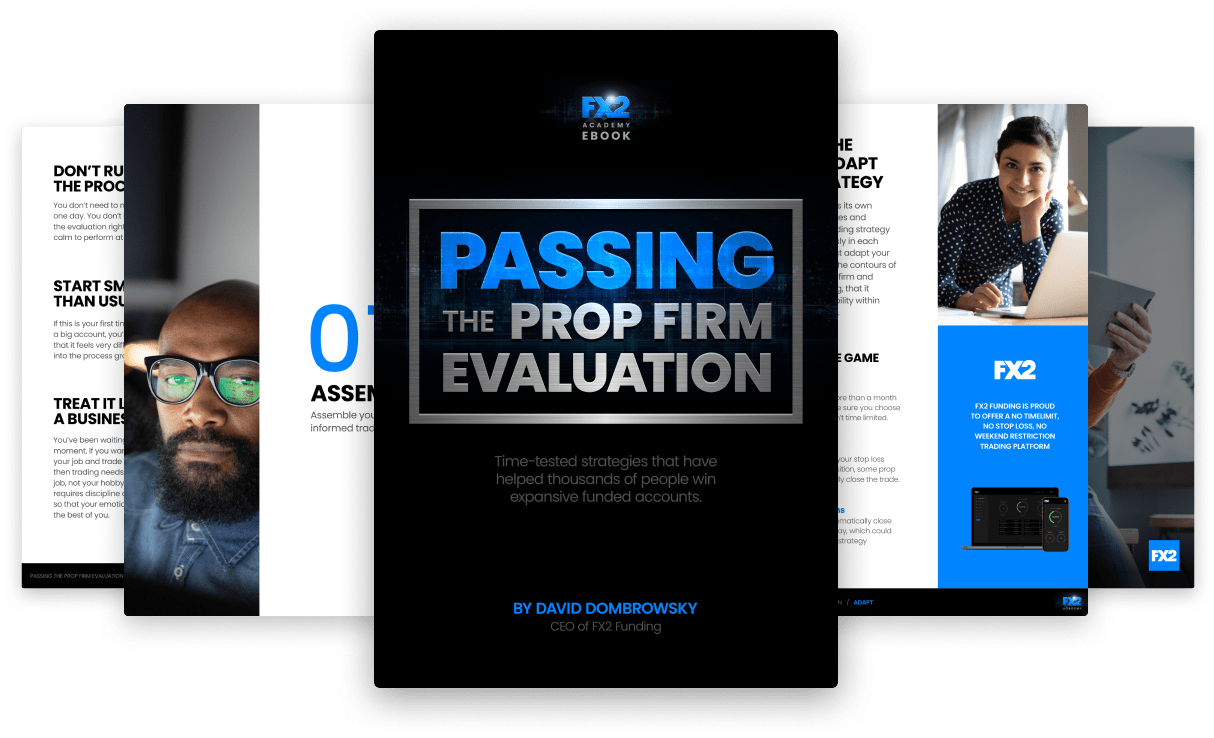
Prop trading firms typically require traders to complete an evaluation process before granting them access to their capital. This process can also be called a challenge, a test, or an assessment. During an evaluation, traders receive a demo account with a specified amount of virtual money.
They then must complete certain objectives or reach specific goals within a set time limit. If they succeed, they are awarded a funded trading account with real capital, and they can begin trading for profits.