Day trading can be an attractive way to earn money, especially if you’re looking to replace or supplement your income. But how much money do you need to start day trading? This isn’t just a technical question. The answer can help you determine if day trading is a realistic way to achieve your financial goals or if you need to look elsewhere. Is Day Trading Profitable? This guide will provide valuable insights into how much money you need to start day trading confidently, enabling you to create a proper budget that aligns with your personal goals and risk tolerance.
FX2 Funding’s prop trading firm solution can help you achieve your objectives by giving you access to the right amount of capital to start day trading with confidence.
What is Day Trading and How Does it Work?
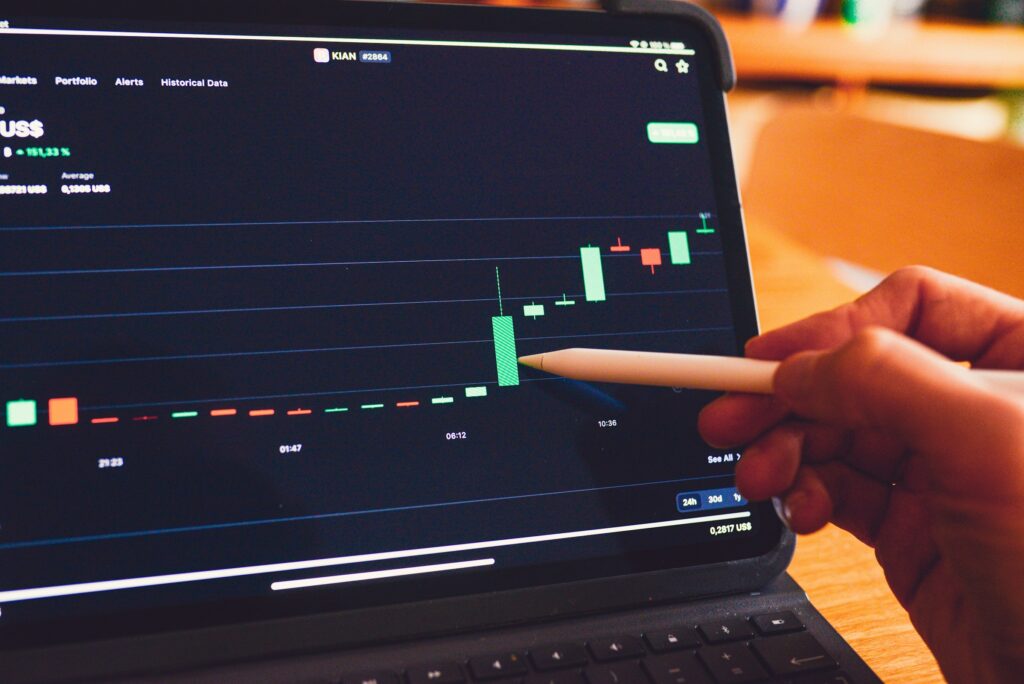
Day trading is a high-speed investment approach where traders buy and sell financial assets, such as stocks or currencies, within the same trading session. The primary aim is to profit from small price shifts by opening and closing positions within minutes or hours, thereby avoiding overnight exposure to unpredictable market events. This strategy relies heavily on quick thinking, in-depth market knowledge, and staying alert to constantly changing trends.
Day traders typically employ methods such as scalping, which involves making numerous small trades for minor gains; momentum trading, which targets assets moving intensely in one direction; and technical analysis, which examines past price patterns to forecast future moves. Due to the intense nature of day trading, it suits those who can dedicate focused time during market hours to analyze and act promptly.
It combines strategy, psychology, and discipline, making it distinct from traditional long-term investing, which centers on fundamental value. For traders seeking financial backing and advanced infrastructure, prop trading firms like FX2 Funding provide funded accounts and resources to help individuals scale their day trading careers efficiently. FX2 Funding offers evaluations to grant access to capital of up to $400,000, allowing traders to retain a significant portion of their profits while benefiting from ethical practices and fast payouts.
FX2 Funding’s Unique Evaluation Process and Flexible Trading Rules
At FX2 Funding, we’ve built our proprietary trading firm on the principles of reliability, transparency, and trader success. We stand apart in a crowded industry by delivering what matters most to serious traders: consistently fast payouts, transparent and unchanging rules, and responsive support from experienced trading professionals. Our MT5 platform provides the professional environment traders need to succeed, while our scaling program enables growth from $25,000 to over $400,000 in funding as performance milestones are achieved.
We’ve designed our evaluation process to identify skilled traders and provide them with significant capital without requiring personal financial risk or large upfront investments. Whether you’re an aspiring trader looking to break into the industry or an experienced professional seeking reliable backing, FX2 Funding offers the trustworthy foundation you need to build a successful trading career. Get started with an evaluation account today and discover why thousands of traders worldwide choose FX2 Funding as their prop firm partner.
How Much Money Do You Need to Start Day Trading?

Starting day trading depends on the market you want to trade, your risk tolerance, and the strategies you have chosen. There is no universal dollar figure. Instead, amounts vary based on regulations and practical trading needs. In the U.S., if you want to be classified as a pattern day trader, you must maintain at least $25,000 in your margin account. This means that executing four or more day trades within five business days triggers this rule, requiring your account balance to remain above this threshold.
This rule protects both traders and brokers by ensuring that they have sufficient capital to cover trading risks. Falling under $25,000 stops you from day trading until you bring your account back to the minimum. Due to fees and potential losses, many traders recommend starting with a larger amount, around $30,000 to $35,000, to establish a financial safety net. Forex markets allow you to start with much lower capital. Many brokers offer accounts with minimum deposits as low as $1 to $10, but this tiny amount limits meaningful trading. To have sufficient room for effective risk management, a budget of around $1,000 to $2,000 is advisable.
Lower capital means you must trade very conservatively to avoid wipeouts. Forex accounts also don’t have the same strict $25,000 limit as stocks because the pattern day trader rule applies only to margin stock accounts. To day trade futures contracts, brokers often require a minimum balance of at least $1,000, but starting with $5,000 or more is recommended to handle margin calls during periods of volatility. Options traders typically require a minimum of $5,000 to $10,000, depending on the strategy. These markets require capital to cover margin requirements and trading risks adequately.
Beyond regulatory minimums, it’s essential to budget for transaction fees, unexpected losses, and to maintain a financial buffer to survive losing streaks. Day trading is inherently risky and fast-paced, so having readily available extra cash is essential. The money you risk must be disposable income, that is, funds you can afford to lose without affecting your standard of living. Over-leveraging or risking essential money can lead to severe financial and emotional consequences. The amount of money to start with depends on your trading market and goals. However, success in day trading demands more than just capital; it requires strong education, strict risk management, and practice, such as simulated trading before committing real funds.
Related Reading
- How to Become an Investor With No Money
- How to Flip Money
- Most Profitable Trading Strategy
- How Much Money Do You Need to Start Trading Stocks
- Is Swing Trading Better Than Day Trading
- Part Time Trading
- How Long Does It Take to Become a Profitable Day Trader
- How to Pick Good Stocks for Short-term
What Is the Pattern Day Trader Rule?

The Pattern Day Trader (PDT) rule is a regulation established by the Financial Industry Regulatory Authority (FINRA) to manage the risks associated with frequent day trading. It applies to traders who make four or more day trades within five consecutive business days in a margin account, provided that these day trades constitute more than 6% of the total trades in that period. Once classified as a pattern day trader, an investor must maintain a minimum equity of $25,000 in their brokerage margin account at all times.
This threshold is designed to ensure traders have sufficient capital to handle potential losses, as day trading involves high volatility and risk, especially when using borrowed funds (margin trading). If a trader’s account falls below this $25,000 minimum, the brokerage typically restricts their ability to execute further day trades until the required balance is restored. Failing to meet this margin call results in account restrictions, often lasting 90 days or until the balance requirement is met. The rule only applies to margin accounts, where funds are borrowed for trading.
It does not apply to cash accounts, where all transactions must be fully paid before selling, although cash accounts have their trading limitations. The PDT rule aims to protect individual investors from excessive risk by ensuring only those with sufficient capital engage in rapid trading. Brokerage firms monitor trading patterns and are required to flag customers as pattern day traders when these criteria are met. Some brokers may even designate clients as pattern day traders if they reasonably believe the clients will engage in such activity, such as after providing day trading training before account opening.
How To Work Around the Pattern Day Trader Rule

The Pattern Day Trader (PDT) rule governs traders who execute four or more day trades within a rolling five-business-day period using a margin account. To comply, these traders must maintain a minimum equity of $25,000 in their accounts; otherwise, they will face trading restrictions. If you want to work around the PDT rule, there are several verified strategies to consider:
1. Use a Cash Account Instead of a Margin Account
The PDT restrictions apply strictly to margin accounts. Trading with settled cash lets you avoid the rule, but note that you cannot use unsettled funds to make new trades. This method limits frequent day trading but allows active trading without the $25,000 minimum.
2. Hold Positions Overnight
Since the rule counts only trades opened and closed within the same day as ‘day trades,’ holding your position overnight resets the count. This means if you have stocks past market close, your next sale won’t be classified as a day trade.
3. Spread Trading Activity Across Multiple Brokerage Accounts
Opening accounts with different brokers can help distribute trades and avoid triggering the PDT label within any single account. This requires careful tracking and sufficient capital in each account and may increase complexity and costs.
4. Trade Instruments Not Covered by the PDT Rule
For instance, futures trading is exempt from the PDT rules, and trading options or foreign equities in certain accounts may provide alternatives. However, each asset class carries unique risks and margin considerations that must be understood fully before proceeding.
5. Avoid Making Four or More Day Trades Within Any Five Business Days
Simply limiting your frequency of day trades keeps you under the PDT threshold. Monitoring your trades and planning accordingly can help prevent triggering the restrictions.
It’s essential to acknowledge that these strategies entail trade-offs and risks. Using multiple accounts or cash accounts can fragment your capital or limit liquidity. Holding positions overnight exposes traders to overnight volatility. Trading different instruments may require additional expertise.
Given this complexity, consulting with a qualified financial advisor is advisable before applying these workarounds. They can help assess whether active day trading aligns with your goals and guide you in navigating regulatory requirements safely to avoid costly mistakes.
FX2 Funding provides robust platforms that are compatible with both desktop and mobile devices, ensuring seamless trade execution and real-time access to market data. This technological advantage enables traders to make informed decisions quickly and manage risk effectively, which is crucial in the fast-paced environment of day trading. By combining a broad selection of instruments with cutting-edge platforms, FX2 Funding equips traders with the tools necessary for success across various market conditions.
Related Reading
- How Much Do Day Traders Make
- Simple Trading Strategy
- Is Options Trading Worth It
- What is Price Action in Trading
- Is Copy Trading Profitable
- Position Trading Strategy
- Short Term Options Trading
- How to Take Profits in Trading
How To Align Your Goals With the Amount You Need to Day Trade

Define Your Purpose
Before you decide how much capital to allocate for day trading, clarify what you aim to achieve. Are you hoping to supplement your income, replace your paycheck, or accumulate wealth over time? Each goal demands a different level of trading capital. For example, someone seeking an extra $500 per month won’t need as much as someone aspiring to day trade full-time. Establishing a clear purpose will help you estimate the starting amount that fits your circumstances.
Assess Your Risk Tolerance
How much risk you’re comfortable with is a significant factor in determining your initial trading account size. Traders who prefer to play it safe typically require more capital, allowing them to use smaller position sizes and limit risk to approximately 1–2% on each trade. Meanwhile, those who are more aggressive might employ a higher risk management strategy, but they must still ensure they can withstand consecutive losses without depleting their account. Honest self-evaluation is essential. Never risk more than you can afford to lose.
Plan for Full-Time Trading
If your objective is to make day trading your career, it’s wise to factor in several months’ worth of living expenses beyond your trading account itself. Having a financial buffer of at least six to twelve months will ease the pressure of needing immediate profits, thus helping you avoid hasty decisions that often lead to losses. Separating your cost-of-living funds from your trading capital gives you a clear mental and financial boundary.
Start Small and Scale Up
Most experienced traders recommend beginning with a modest sum rather than going “all in” immediately. This approach enables you to gather experience and refine your strategy with minimal downside risk. As you become more proficient and consistently profitable, you can gradually scale up your investment in line with your evolving targets. This measured progression not only helps protect your capital but also supports steady skill development.
FX2 Funding fosters a community atmosphere where traders can share insights and participate in exclusive giveaways and discounts, thereby reinforcing a supportive ecosystem that promotes sustained growth and success. This holistic approach makes FX2 Funding a standout choice for day traders seeking a transparent, flexible, and trader-first prop trading firm.
Related Reading
- How Old Do You Have to Be to Start Trading
- What is Orb in Trading
- Best Stocks for Beginners
- Swing Trading Strategies
- Day Trading Indicators
- Trading Risk Management Tools
- Key Levels in Trading
- Best Market to Trade for Beginners
Get Funded and Start Prop Trading Today
The first step to starting day trading is to choose a reliable platform or proprietary firm. To achieve success, it is essential to find a platform that offers prompt payouts, responsive customer support, and transparent rules. Once you start day trading, you will be under a lot of pressure, and the last thing you want is to encounter any surprises or delays when cashing out your profits.
Most day trading firms will have specific rules about how much money you need to start day trading with them. After you pay any fees to join the firm, you will need to follow their guidelines for trading with their capital. The amount of money you need to start day trading will depend on the firm and your trading goals. In general, the more money you have to begin with, the better.
How FX2 Trading Supports Day Trading
At FX2 Funding, we’ve built our proprietary trading firm on reliability, transparency, and trader success. We stand apart in a crowded industry by delivering what matters most to serious traders: consistently fast payouts, clear, unchanging rules, and responsive support from experienced trading professionals. Our MT5 platform provides the professional environment traders need to succeed, while our scaling program enables growth from $25,000 to over $400,000 in funding as performance milestones are achieved.
We’ve designed our evaluation process to identify skilled traders and provide them with significant capital without requiring personal financial risk or large upfront investments. Whether you’re an aspiring trader looking to break into the industry or an experienced professional seeking reliable backing, FX2 Funding offers the trustworthy foundation you need to build a successful trading career. Get started with an evaluation account today and discover why thousands of traders worldwide choose FX2 Funding as their prop firm partner.