Many traders wonder, Is day trading profitable? This is a perfectly valid question that can be answered in numerous ways, depending on who you ask. Position trading, also known as long-term trading, presents a stark contrast to day trading. Where day trading seeks to capitalize on short-term market fluctuations and closes out trades within hours or minutes, position trading employs a longer timeframe to maximize profits. Position traders may hold trades for weeks, months, or even years.
This blog will help you understand how position trading works, enabling you to confidently apply this long-term strategy to maximize profits and minimize risks. FX2 Funding’s prop trading firm solution can help you achieve your objectives by giving you access to funding and a supportive trading community as you navigate your way through position trading.
What is Position Trading?
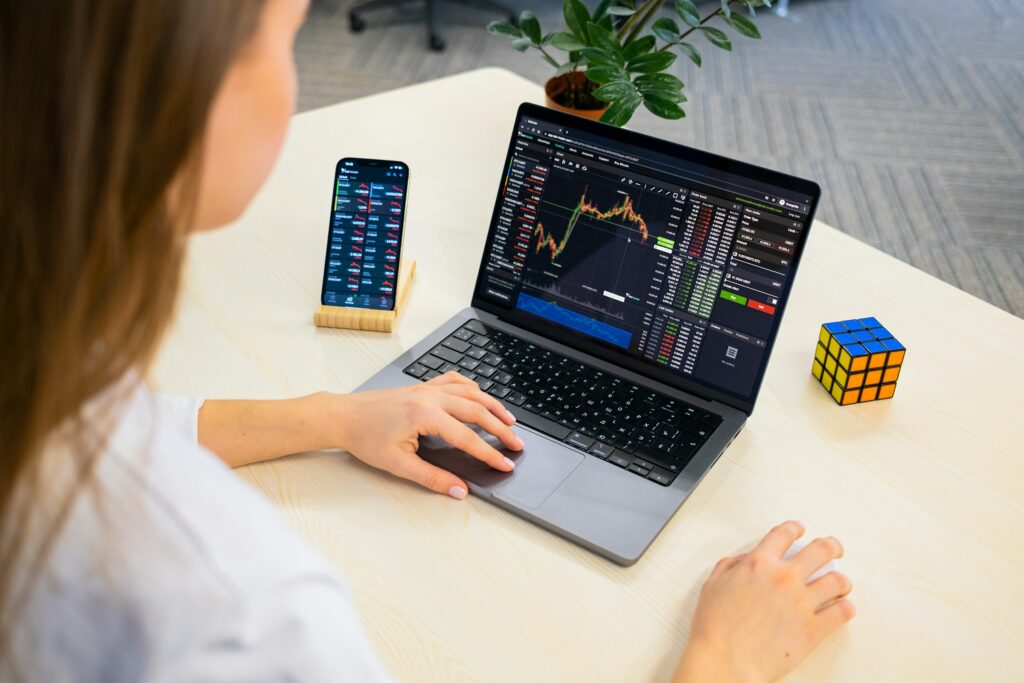
Position trading is a strategy where a trader holds an asset for an extended period, often weeks, months, or even years, aiming to profit from major long-term market trends. Unlike short-term approaches such as day trading or swing trading, position traders focus on the bigger picture, deliberately ignoring daily price fluctuations to capitalize on substantial market moves.
How It Differs from Investing
This style closely resembles investing but with a key difference: position traders can take both long and short positions, speculating on upward or downward trends, while traditional investors usually only buy and hold long positions. Position trading is popular across various markets, including stocks, forex, cryptocurrencies, commodities, and indices.
Core Approach and Analysis
The hallmark of position trading is patience and trend-following. Traders identify promising long-term trends through both fundamental and technical analysis, carefully planning their entry and exit points. They often rely on tools like support and resistance levels and set stop-loss orders to manage risk effectively.
Advantages of Position Trading
Position trading has several advantages. It reduces the need for constant monitoring, as trades are held over more extended periods. This helps dampen the “noise” of daily price volatility, enabling traders to capitalize on more significant market moves.
Risks to Consider
However, holding positions for longer also exposes traders to risk from adverse market shifts, emphasizing the importance of thorough research and effective risk management.
Position Trading vs. Swing and Day Trading
While swing trading operates on a medium-term horizon of days to weeks, position trading extends that timeframe significantly, often capturing the latter part of substantial market trends. Position traders typically have fewer open positions compared to day traders, who execute multiple trades daily with short holding durations.
Who is Position Trading Best For?
Position trading suits traders who prefer a less time-intensive approach but want active involvement beyond passive investing. It’s well-suited for individuals who can’t watch markets continuously but still want to manage their money actively and capitalize on longer-term market movements.
FX2 Funding’s Unique Evaluation Process and Flexible Trading Rules
FX2 Funding offers excellent opportunities for traders interested in long-term strategies like position trading, providing funding and support to help you maximize your potential in markets with substantial trend movements.
At FX2 Funding, we’ve built our proprietary trading firm on the principles of reliability, transparency, and trader success. We stand apart in a crowded industry by delivering what matters most to serious traders: consistently fast payouts, transparent and unchanging rules, and responsive support from experienced trading professionals. Our MT5 platform provides the professional environment traders need to succeed, while our scaling program enables growth from $25,000 to over $400,000 in funding as performance milestones are achieved.
We’ve designed our evaluation process to identify skilled traders and provide them with significant capital without requiring personal financial risk or large upfront investments. Whether you’re an aspiring trader looking to break into the industry or an experienced professional seeking reliable backing, FX2 Funding offers the trustworthy foundation you need to build a successful trading career. Get started with an evaluation account today and discover why thousands of traders worldwide choose FX2 Funding as their prop firm partner.
Benefits of Choosing Position Trading

Reduced Trading Frequency
Position trading involves holding assets for extended periods, typically weeks to months, thereby minimizing the need for constant market monitoring. This lower trading frequency reduces the mental and emotional stress commonly associated with active day trading, allowing traders to avoid the pressure of reacting to every market tick. As a result, position traders can better balance trading with other professional or personal pursuits, dedicating less time to screen-watching while still participating in the markets.
By trading less frequently, position traders are not overwhelmed by short-term market noise and can maintain a more relaxed, strategic approach. This is particularly beneficial for those who prefer a hands-off style, focusing on long-term trends rather than short-lived price fluctuations that can distract and mislead frequent traders.
Long-term Profit Potential
Position trading aims to capitalize on substantial market moves occurring over longer durations, which can yield larger profits compared to short-term strategies. By riding major trends and holding positions beyond intermittent ups and downs, position traders target significant price appreciation linked to fundamental factors such as economic growth, sector developments, or corporate earnings. Such a long-term horizon enables traders to benefit from the compounding effect of moves that develop over months or years, potentially achieving higher returns on their investments.
However, this approach requires patience and confidence, as the market can experience temporary setbacks or reversals that do not invalidate the overall trend. Traders must be prepared for fluctuations and maintain a focus on the broader market trajectory to capitalize on these larger profit opportunities over time.
Reduced Transaction Costs
Because position traders place fewer trades, the total transaction expenses, including broker commissions, spreads, and slippage, are significantly lower than those incurred by active day traders or swing traders. This reduction in trading frequency preserves capital that would otherwise be diminished by frequent buying and selling, thereby enhancing net profitability. Lower transaction costs become increasingly impactful over the long term, allowing gains to compound without continuous erosion from fees.
Additionally, holding positions for more extended periods may qualify traders for preferential long-term capital gains tax treatments in many jurisdictions, which further enhances after-tax returns compared to the higher taxes usually applied to short-term trading profits. This cost-effectiveness makes position trading an appealing strategy for investors seeking sustainable wealth growth.
Related Reading
- How to Become an Investor With No Money
- How to Flip Money
- Most Profitable Trading Strategy
- How Much Money Do You Need to Start Trading Stocks
- Is Swing Trading Better Than Day Trading
- Part Time Trading
- How Long Does It Take to Become a Profitable Day Trader
- How to Pick Good Stocks for Short-term
Risks Involved in Position Trading

Market Risk and Volatility
Position trading strategy may sound enticing, but traders must be ready for the risks that come with it. First and foremost, market risk and volatility. Because position traders typically hold their trades for weeks or months, they are vulnerable to sudden market shifts that can result in significant losses. Economic data releases, changes in market sentiment, and geopolitical events can all lead to adverse price movements that can hurt position traders. While they aim to capitalize on broad trends, there is no guarantee that these trends will move in their favor over the duration of the trade. The longer a position is held, the greater the exposure to unpredictable market volatility.
Opportunity Cost
Position trading also comes with opportunity costs that traders must consider. By committing capital to long-term trades, position traders may miss out on other lucrative opportunities that arise in the short term. Since capital is tied up in the longer-term trade, traders may not be able to swiftly enter new positions that offer attractive returns in faster-moving markets. This limited flexibility can restrict overall profitability and reduce the benefits of position trading.
Margin and Capital Requirements
One of the most significant differences between day trading and position trading is the duration of trades. Because position trades are held for longer durations, margin requirements tend to be higher. Maintaining a margin to support position trades can lock up significant capital, reducing liquidity and limiting a trader’s ability to participate in alternative opportunities. Additionally, trading on margin can amplify risks, as losses can exceed the initial investment if the market moves unfavorably.
Liquidity Risk
Another risk unique to position trading is the lack of liquidity. Position traders can encounter liquidity issues, especially in less active markets. If a trader attempts to close a position and there are insufficient market participants available, they may have trouble executing an order at their desired price. This can lead to slippage that increases trading costs and eats into profits.
Overnight Gaps and Unforeseen Events
One of the most dangerous aspects of position trading is the risk of overnight gaps. When position traders hold trades overnight, they expose themselves to the risk of price gaps between closing and opening prices due to after-hours news or events. Such gaps can lead to immediate losses if the price gaps against the trader’s position before the market reopens. Additionally, unexpected announcements, geopolitical tensions, or the release of economic data can create sharp market movements that are difficult to predict and manage.
Psychological and Emotional Risks
Long-term positions require a high degree of discipline and patience. As a trader, you must withstand potential drawdowns and avoid impulsive reactions driven by fear or greed. Emotional decisions, such as exiting prematurely or holding onto losing trades in the hope of a reversal, can undermine trading success. Maintaining a clear and well-structured trading plan is crucial in navigating these psychological challenges.
Related Reading
- How Much Do Day Traders Make
- Simple Trading Strategy
- Is Options Trading Worth It
- What is Price Action in Trading
- Is Copy Trading Profitable
- How Much Money Do You Need to Start Day Trading
- Short Term Options Trading
- How to Take Profits in Trading
Tools and Techniques for Implementing Position Trading
Technical Analysis

Technical analysis is central to position trading, enabling traders to identify long-term trends and optimal entry and exit points. It involves utilizing a range of technical indicators, such as moving averages, the Relative Strength Index (RSI), and stochastics, to interpret price action patterns and market momentum. These tools help traders spot trend continuations or reversals and time their trades accordingly.
By analyzing historical price data and chart patterns, position traders gain insight into the market’s trajectory, allowing them to avoid reacting to minor fluctuations. For example, moving averages can indicate when a security’s price crosses above a key average, signaling the start of an uptrend. At the same time, the RSI can highlight overbought or oversold conditions, guiding timely entries and exits.
Fundamental Analysis
Fundamental analysis is another significant tool for position traders, focusing on the intrinsic value of assets. Traders examine macroeconomic indicators, such as GDP growth, interest rates, and inflation, to form views on overall market conditions. Additionally, company-specific data, including earnings reports and financial statements, are scrutinized to assess whether assets are undervalued or overvalued.
This approach enables traders to select securities with strong long-term growth potential, allowing them to hold positions confidently over extended periods despite short-term volatility. By combining fundamental insights with technical signals, traders can enhance the accuracy of their trade decisions and align their trades with economic realities.
Risk Management
Effective risk management is vital in position trading to protect capital over the long holding periods involved. Tools like stop-loss orders automatically close positions when prices move against a trader beyond a set level, limiting potential losses. However, ordinary stop-losses do not guarantee execution at the stop price during periods of high volatility; thus, guaranteed stop-loss orders, available for a premium, may be employed to ensure an exit irrespective of market conditions.
Traders also use take-profit orders to lock in gains once a predetermined profit target is reached. Assessing the risk-to-reward ratio carefully before entering trades ensures that potential profits justify the risks taken, contributing to sustainable long-term trading success.
Additional Techniques
Position traders often incorporate specific strategies, such as trend following, breakout trading, and support/resistance trading, to refine their approach. Trend following involves investing in assets exhibiting sustained upward movement, often confirmed by moving averages. Breakout strategies focus on entering trades when prices surpass historical resistance levels, anticipating a new upward trend. Support and resistance tactics rely on buying near support zones and selling near resistance to minimize risk.
How to Develop a Position Trading Strategy

Developing a position trading strategy involves several key steps to identify and capitalize on long-term market trends, often spanning months or even years. This approach prioritizes significant market movements over minor, short-term fluctuations and closely resembles long-term investing.
1. Selecting Trading Instruments
Position traders must first decide on the type of financial instruments they will trade. This involves a choice between underlying assets or various derivatives. The selection of instruments will influence the analytical tools and risk management techniques employed.
2. Incorporating Technical and Fundamental Analysis
A robust position trading strategy benefits from a comprehensive understanding of both technical and fundamental analysis . These analytical methods provide diverse tools to interpret market dynamics and identify trends .
Technical analysis is crucial for identifying optimal entry points by studying past price data to identify patterns and signals. Tools such as moving averages, the Relative Strength Index (RSI), Fibonacci retracement levels, candlestick patterns, and chart patterns (e.g., head and shoulders) help determine when to enter a trade. Fundamental analysis, on the other hand, is particularly useful for determining when to exit a trade. It involves evaluating broader economic data, company earnings reports, and news events that can impact market movements.
3. Defining Entry and Exit Points
A critical component of any trading strategy is establishing clear entry and exit points. This involves determining the precise moments to initiate and conclude a trade.
Successful traders often employ a combination of technical indicators, fundamental analysis, and market sentiment to pinpoint the best entry points. For exits, understanding the economic landscape and potential news events can inform decisions. Tools such as trendlines, support and resistance levels, and stop-loss orders are also crucial for managing trades and securing profits or limiting losses.
4. Recognizing Trend Reversals
While position traders typically disregard minor market fluctuations due to their long holding periods, they must remain vigilant for trend reversals. Ignoring these significant shifts can lead to substantial losses.
Given the long-term nature of position trading, a deep understanding of market fundamentals, macroeconomic trends, and long-term price movements is essential. Patience is also a key attribute, as it can take considerable time for a trade to mature and reach its profit target.
Get Funded and Start Prop Trading Today
At FX2 Funding, we’ve built our proprietary trading firm on the principles of reliability, transparency, and trader success. We stand apart in a crowded industry by delivering what matters most to serious traders: consistently fast payouts, transparent and unchanging rules, and responsive support from experienced trading professionals. Our MT5 platform provides the professional environment traders need to succeed, while our scaling program enables growth from $25,000 to over $400,000 in funding as performance milestones are achieved.
We’ve designed our evaluation process to identify skilled traders and provide them with significant capital without requiring personal financial risk or large upfront investments. Whether you’re an aspiring trader looking to break into the industry or an experienced professional seeking reliable backing, FX2 Funding offers the trustworthy foundation you need to build a successful trading career. Get started with an evaluation account today and discover why thousands of traders worldwide choose FX2 Funding as their prop firm partner.
Related Reading
- How Old Do You Have to Be to Start Trading
- What is Orb in Trading
- Best Stocks for Beginners
- Swing Trading Strategies
- Day Trading Indicators
- Trading Risk Management Tools
- Key Levels in Trading
- Best Market to Trade for Beginners