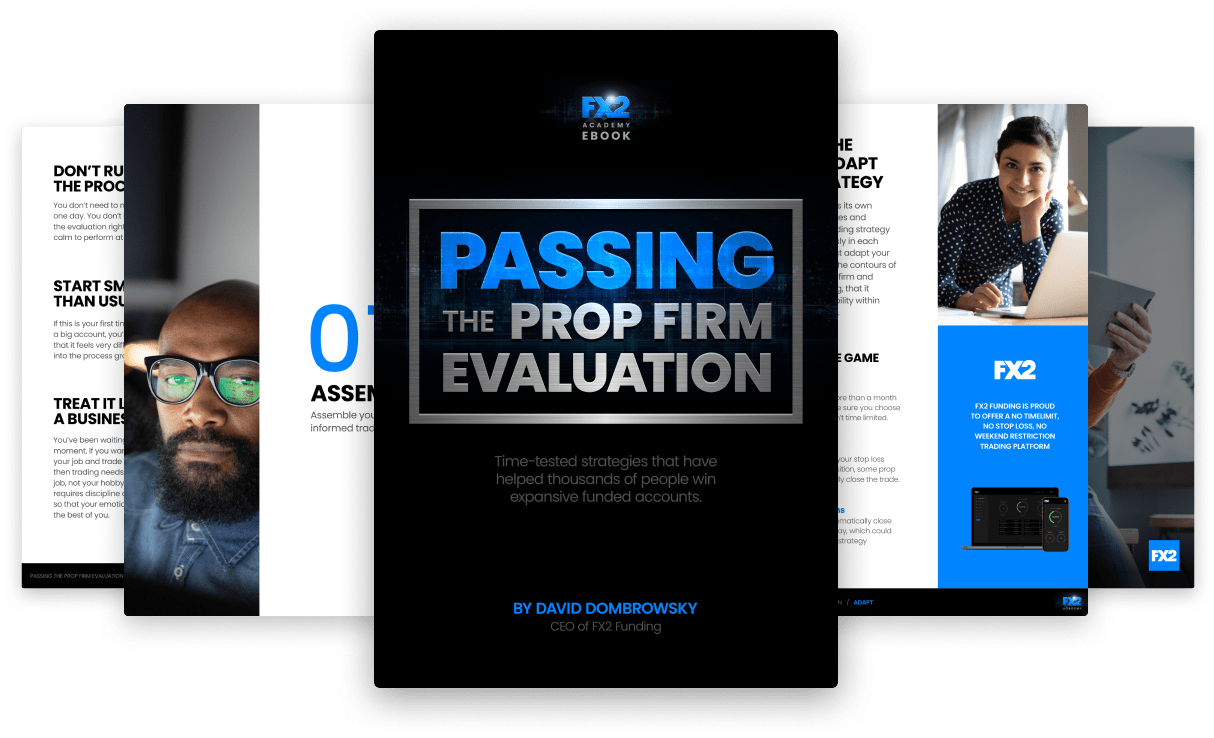
Have you ever wondered how some traders seem to have an endless supply of capital to trade? For instance, you might know a trader who loses money one month and returns the next month with a considerable profit.
You might also see a trader who doesn’t seem fazed by drawdowns. They have a magic number that allows them to recover after a loss. These traders often belong to prop firms, and if you want to find out how they work, this guide will answer your questions.
Understanding how prop firms work will help you learn how to become a prop trader. This post will detail how prop firms operate, their benefits and risks, and how to leverage them for successful trading.
What are Prop Firms?

Prop Firms, commonly called “Proprietary trading firms,” are financial institutions that use their capital to trade financial instruments such as stocks, bonds, commodities, derivatives, and currencies. Unlike traditional investment firms that manage clients’ funds, prop firms focus solely on generating profits from their internal resources.
This unique business model allows them to retain 100% of the profits earned from their trading activities. Prop firms play a pivotal role in the financial markets by leveraging advanced trading strategies and cutting-edge technology to exploit market inefficiencies. Their operations are characterized by high-risk, high-reward dynamics, making them an attractive option for skilled traders seeking access to substantial capital and professional trading environments.
Recent PropFirms statistics show that interest in cryptocurrency trading through prop firms has risen steadily, from 83 searches in 2020 to 4,361 in 2024, a 5,156% increase. Despite the volatility of the crypto markets, traders continue to explore opportunities within prop firms.
Key Characteristics of Prop Firms

Proprietary trading firms distinguish themselves through several defining features:
1. Capital Usage
Prop firms exclusively trade with their money rather than rely on client funds. This independence allows them greater flexibility in decision-making and risk-taking.
2. Profit Retention
Unlike brokerages or investment firms that earn commissions or fees, prop firms retain 100% of the profits generated from their trades. This direct profit model is one of the primary reasons for their popularity among traders.
3. Trading Strategies
Prop firms employ various sophisticated trading strategies to maximize returns:
- a. Arbitrage: Exploiting price discrepancies across different markets or instruments.
- b. Algorithmic Trading: Using computer algorithms to execute trades based on predefined criteria.
- c. High-Frequency Trading (HFT): Executing thousands of trades within milliseconds to capitalize on minute price movements.
- d. Quantitative Trading: Utilizing mathematical models and statistical analysis to predict market trends.
Related Reading
- What Is Prop Firm Trading
- Is Prop Trading Worth It
- Are Prop Trading Firms Legit
- How to Get Into Prop Trading
- How Do Prop Firms Make Money
- Prop Trading vs. Hedge Fund
How do Prop Firms Work?

Understanding Proprietary Trading Firms
Proprietary trading firms, or prop firms, are companies that invest their own capital to profit from the financial markets. While prop firms may execute trades on behalf of clients, their primary goal is to increase their wealth, not that of their customers. This goal gives prop traders access to advanced trading tools and strategies to make money quickly. Prop firms are often secretive about their operations, but they can be highly lucrative for the firm and the trader.
How Prop Firms Operate
Capital Deployment
Prop firms allocate their funds specifically for trading purposes rather than tying them to client accounts. This autonomy allows prop traders to employ advanced strategies and tools that may not be accessible to individual investors. By using their capital, firms can execute trades that might be too risky for client accounts, potentially leading to higher returns. However, this also means that firms must manage risk carefully to avoid significant losses that could impact their financial stability.
Trading Strategies
Prop traders employ sophisticated strategies tailored to market conditions. For example:
Statistical Arbitrage
Traders analyze pricing discrepancies between related assets using quantitative models. By identifying mispriced securities, they can execute trades that capitalize on these discrepancies for profit. Statistical arbitrage requires advanced statistical techniques and real-time data analysis to identify opportunities quickly.
Volatility Arbitrage
This strategy involves exploiting price fluctuations in volatile markets. Traders may use options or other derivatives to bet on changes in volatility levels rather than the direction of asset prices. Volatility arbitrage requires a deep understanding of market dynamics and the ability to predict volatility changes accurately.
Merger Arbitrage
Traders bet on price movements during mergers or acquisitions. For example, they might buy shares of a target company while short-selling shares of the acquiring company based on expected price adjustments. Merger arbitrage involves analyzing the likelihood of deal completion and potential price movements post-merger.
Advanced Tools
Proprietary trading firms rely heavily on cutting-edge technology to gain a competitive edge in the market. Algorithmic trading systems are a cornerstone of many prop firms’ operations. These systems use pre-programmed instructions based on quantitative models to execute trades at high speeds and volumes.
Risk Management
Effective risk management is essential for the sustainability of proprietary trading firms. Since prop trading involves the firm’s capital, losses directly impact its balance sheet. Firms implement rigorous control measures such as position limits and real-time risk analytics to mitigate these risks.
Related Reading
- Crypto Prop Trading
- Prop Trading Strategies
- Prop Desk Trading
- Best Prop Trading Firms for Beginners
- Highest Paying Prop Trading Firms
- Best Proprietary Trading Firms
- Best Prop Firms for US Traders
- Futures Prop Trading Firms
- Forex Prop Trading Firms
- Stock Prop Trading Firms
What are the Benefits and Risks Of Trading With Prop Firms

Get The Funds: Access to Capital
Joining a prop firm gives traders access to the company’s capital. This allows them to take more prominent trading positions than they could with their funds. Using the firm’s capital to trade can lead to more significant profits and can help accelerate a trader’s career.
Sleep Easier: Reduced Risk
When trading with a prop firm, traders use its capital, not their own. This dramatically reduces the risk of trading. As a result, traders can take calculated risks and explore various trading strategies without fearing losing their money.
Level Up: Professional Development
Prop firms provide extensive training for their traders. They offer educational resources, mentorship, and access to advanced trading tools and technologies. This training can help traders develop their skills, and many benefit from the collective knowledge and experience of the firm’s team.
Keep More Of What You Earn: Cost Efficiency
Proprietary trading firms typically charge lower commissions and fees than retail brokerage platforms. This cost efficiency can positively impact a trader’s overall profitability. The more money a trader can keep from their profits, the better.
Get The Tools You Need: Technology and Infrastructure
Prop firms invest heavily in technology infrastructure, including high-speed internet connections, advanced trading platforms, and data analytics tools. Traders can use these resources to execute trades more efficiently and effectively.
Get Paid To Succeed: Performance-Based Compensation
Many prop trading firms offer performance-based compensation structures. This means traders are rewarded based on their trading performance, often through profit-sharing agreements. This can incentivize traders to strive for consistent profitability.
Variety Is The Spice Of Life: Diversification
Prop firms usually support trading across multiple asset classes and markets. This enables traders to diversify their trading strategies and reduce reliance on a single market or instrument.
Follow The Rules: Strict Risk Management Rules
Prop firms implement strict risk management guidelines to protect their capital. Traders must adhere to these rules, which can limit their flexibility in executing trades.
Play By The Firm’s Rules: Trading Guidelines
Firms often have specific trading guidelines that traders must follow. These guidelines can restrict the types of trades that can be executed or the amount of capital used for trading.
Feel The Heat: Performance Pressure
The performance-based compensation structure can create pressure on traders to consistently perform well. This pressure can be stressful and may lead to over-trading or poor decision-making.
Know The Risks: Regulatory Scrutiny
Proprietary trading is subject to regulatory oversight, impacting the firm’s operations and trading strategies. Traders must comply with these regulations, which can sometimes limit their trading activities.
How To Choose the Right Prop Firm Platform

User-Friendly Interface: The First Thing To Check
A user-friendly interface is essential for easy navigation and quick trade execution. Look for platforms with intuitive designs, customizable layouts, and easy access to critical functions. This ensures traders can focus on making informed decisions rather than struggling with the platform.
Advanced Charting and Analysis Tools: Don’t Settle For Less
Advanced charting tools are vital for informed trading decisions. Ensure the platform offers various chart types, technical indicators, real-time data feeds, and historical data analysis. These tools enable traders to visualize market trends, identify patterns, and develop effective trading strategies. Real-time data feeds are critical, allowing traders to react quickly to market changes.
Risk Management Features: Protect Yourself Before You Wreck Yourself
Effective risk management is crucial for the sustainability of any proprietary trading firm. Choose platforms with built-in tools like stop-loss orders, position limits, and real-time risk analytics. These features help traders monitor and control risk exposure, preventing significant losses during volatile market conditions.
Customizability and Flexibility: Adapt to Survive
Customizability is key for adapting to unique trading strategies. Opt for platforms that allow interface customization, personalized watchlists, and custom indicators. This flexibility ensures that the platform can adapt to your firm’s evolving needs, whether you are focusing on specific markets or developing new trading strategies.
Custom indicators can be handy for traders who rely on specific technical signals or patterns. By creating personalized indicators, traders can automate parts of their analysis, freeing up time to focus on higher-level strategy development. Additionally, customizable watchlists allow traders to monitor the assets most relevant to their trading strategies, keeping them informed and ready to act on market opportunities.
Integration Capabilities: Make Sure Everything Works Together
Integration with other tools and systems is essential for streamlined operations. Ensure the platform integrates well with risk management software, CRM systems, and external data feeds. This integration ensures that all your tools work together efficiently, reducing manual data entry and minimizing the risk of errors.
Robust Security Measures: Sleep Well Knowing You’re Safe
Security is paramount in the trading industry. Look for platforms with robust measures like two-factor authentication, encryption, and regular security updates. These features protect sensitive data and prevent unauthorized access, safeguarding your firm’s information and maintaining compliance with regulatory standards.
Scalability: Growth Is The Name Of The Game
Scalability is essential for growth. Choose platforms that can handle increased trading volumes without compromising performance. As your firm expands, scaling operations smoothly is critical for maintaining efficiency and profitability.
Customer Support: Help When You Need It
Excellent customer support minimizes downtime and ensures that any issues are resolved quickly. Opt for firms offering comprehensive support, including 24/7 service and dedicated account managers. This level of support provides peace of mind, knowing that assistance is available whenever needed.
Real-Time Data and Market Access: Get What You Need When You Need It
Real-time data and access to multiple markets are essential for informed trading decisions. Ensure the platform provides real-time quotes and access to various financial markets. This allows traders to react quickly to market changes and capitalize on opportunities.
Algorithmic Trading Capabilities: Get An Edge On The Competition
Algorithmic trading capabilities can give your firm a competitive edge. Look for platforms that support advanced algorithmic trading strategies, allowing traders to automate their trading processes and execute trades at high speeds and volumes.
Performance Analytics: Assess Your Strengths and Weaknesses
Comprehensive performance analytics are crucial for evaluating trading strategies and making data-driven decisions. Choose platforms that provide insights into trading performance, risk metrics, and profitability. These tools help firms identify strengths and weaknesses, improving overall trading performance.
Mobile Trading: Trade Anytime, Anywhere
Mobile trading capabilities are vital for trading on the go. Ensure the firm offers a fully functional mobile app with real-time data and trading capabilities. This allows traders to monitor markets and execute trades from anywhere, ensuring they never miss an opportunity. Mobile apps should provide the same functionality as desktop platforms, including access to real-time data feeds and trading tools.
Educational Resources: Continuous Learning Is Key
Continuous learning is essential for staying competitive in trading. Opt for firms that provide educational resources like webinars, tutorials, and market analysis. These resources help traders improve their skills and knowledge, contributing to the firm’s overall success and growth.
Related Reading
- Best Prop Firm for Options Trading
- Best Crypto Prop Trading Firms
- Best Remote Prop Trading Firms
- FTMO vs. The Prop Trading
- Day Trading Prop Firms
- Equity Prop Trading Firms
- No Minimum Trading Days Prop Firm
- Futures Swing Trading Prop Firm